Mountain Bike Jersey vs Road Jersey
A mountain bike jersey and a road cycling jersey are both made for cycling, but they are not developed around exactly the same riding conditions. The rider's position, range of movement and surrounding environment can all affect how the jersey should fit and how it should be constructed.
For a brand developing both types of apparel, these differences matter before the artwork is even finalized. The two jerseys can share a visual identity and some construction details, but the pattern, fabric and proportions may need to change according to how each garment will be used.
The Riding Position Affects the Fit
The way a rider sits on the bike has a direct effect on how a jersey needs to fit.
Road cycling often involves a sustained forward position, with the upper body leaning toward the handlebars for long periods. A jersey developed for this position needs to sit properly across the shoulders and back without leaving unnecessary fabric around the body. Body length, sleeve placement and shoulder shape all contribute to how it feels once the rider is on the bike.
Mountain biking involves more changes in body position. The rider may move between seated and standing positions, shift weight on the bike and change the position of the upper body as the terrain changes. The jersey therefore needs to allow this movement without becoming restrictive.
This does not mean that a road jersey always needs to be tight or that an MTB jersey always needs to be loose. The right fit depends on the intended use and the riding position the garment has been developed around.
For product development, the useful reference is how the jersey behaves on the bike, rather than how it looks when the rider is simply standing still.
Movement Changes the Pattern Requirements
Both types of jersey need to allow the rider to move, but the range of movement can be different.
On the road, the rider may remain in a relatively consistent position for a long period. The shoulders and arms still need sufficient freedom, but the pattern can be developed around a more predictable posture.
Mountain biking can require more active movement through the upper body. Riders may stand on the pedals, move their weight forward or backward and adjust their position as they respond to the trail. This can place different demands on the shoulders, sleeves and upper back.
These requirements can influence the amount of room built into the pattern and the way the sleeves are shaped. A jersey that works well in a road riding position should not automatically be treated as the correct starting point for an MTB jersey.
The difference is not necessarily visible in every part of the finished garment. It can be found in small changes to proportions and pattern shaping that become more noticeable once the jersey is worn and the rider starts moving.
Coverage Follows the Riding Environment
The environment in which the jersey is used can also influence its coverage.
Road cycling generally takes place in a more open environment, so airflow, weight and a streamlined fit may receive more attention during development. Coverage still needs to suit the conditions, but it is considered within the requirements of road riding.
Mountain biking takes place closer to the surrounding terrain. Depending on where and how the garment is used, the product may need to account for vegetation, trail conditions and contact with equipment. This can influence decisions about sleeve length, body coverage and material selection.
It does not mean that an MTB jersey needs to be heavier or more protective. Those decisions depend on the product itself and the conditions it is intended to handle.
The same principle applies to road apparel. A jersey intended for hot‑weather riding may require a different balance of coverage and airflow from one developed for cooler conditions.
Fabric Selection Depends on the Intended Use
Fabric selection should follow the requirements of the garment rather than the category name alone.
For road cycling, factors such as airflow, moisture management, weight and the way the fabric sits against the body can all influence the choice. For longer rides, the material also needs to remain comfortable as the rider spends more time in the same position.
For MTB jerseys, stretch and freedom of movement may have greater importance depending on the intended use. The riding environment can also affect how the balance between lightweight construction, coverage and durability is considered.
There is considerable overlap between the two. An MTB jersey still needs to manage moisture effectively, while a road jersey may also need stretch and durability.
The difference is in the balance. Fabric should be selected according to what the finished garment needs to do, rather than because a particular material is simply associated with one type of cycling.
Construction Reflects the Intended Use
The differences in riding position and movement can influence the construction of the jersey as well.
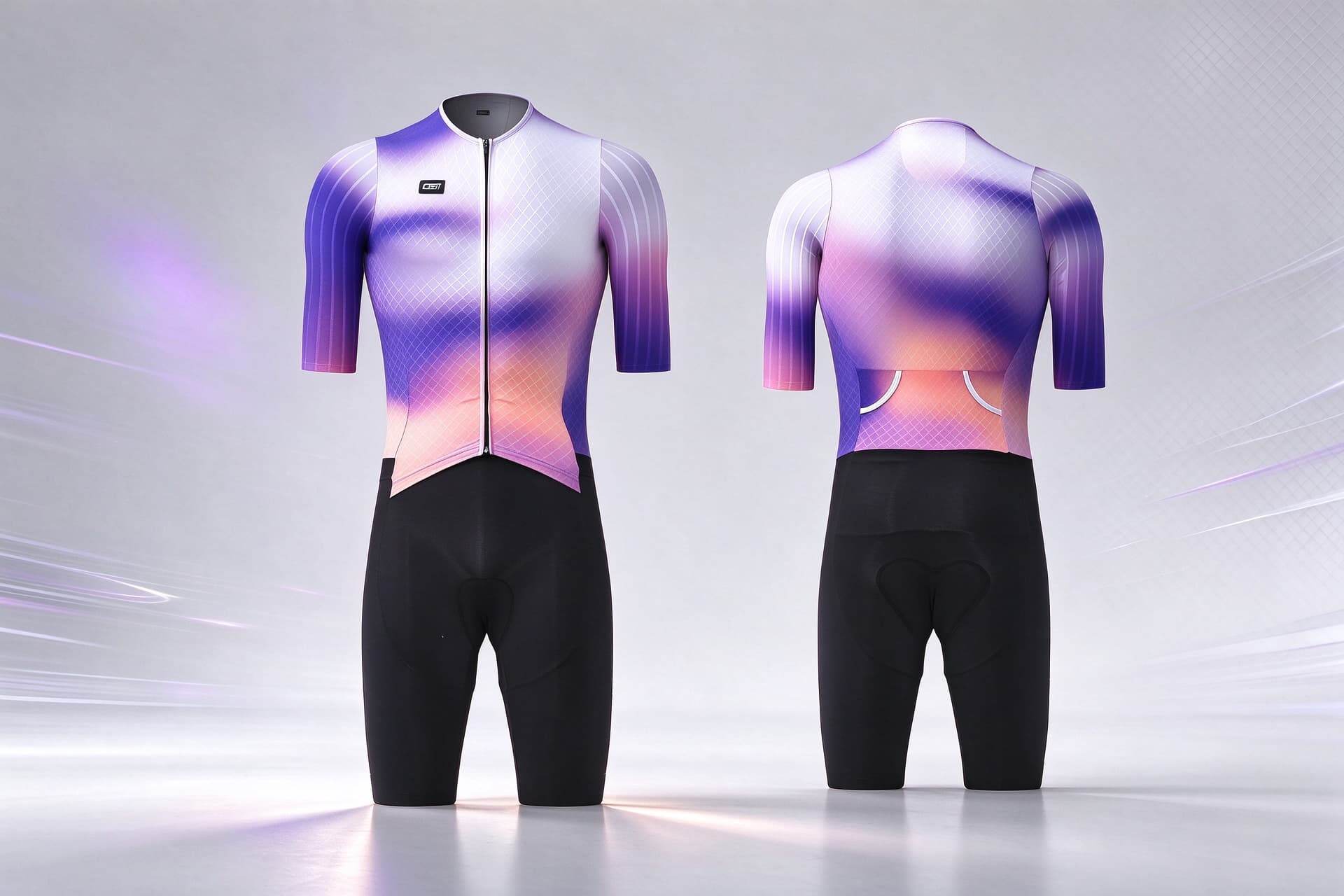
Sleeve proportions, body length, panel shapes, shoulder construction and collar placement all affect how the garment behaves when it is worn. A road jersey can be developed around the relatively stable position of road riding, while an MTB jersey may need to accommodate more movement through the upper body and arms.
The difference may not be obvious when the two jerseys are laid flat. They can use similar fabrics and share some construction details while still having different proportions or pattern shapes.
This is why changing the artwork on an existing cycling jersey does not automatically create a suitable product for another riding category. The garment needs to be considered first, with the visual design developed around its actual construction.
At the same time, there is no reason for every construction detail to be different. Where the riding requirements overlap, some elements can remain consistent across both categories.
Artwork Needs to Follow the Garment
Road and MTB jerseys can both carry team graphics, sponsor logos and brand elements, but the artwork still needs to work with the shape of the garment.
A design created for a road jersey may not transfer directly to an MTB jersey if the sleeve shape, body proportions or panel layout change. A graphic that looks balanced on one garment can appear differently when it is placed on another.
This becomes important for brands that want road and MTB products to share the same visual identity. Brand colors, logos and graphic elements can remain consistent without forcing every jersey to use exactly the same artwork layout.
The garment should determine where the artwork works best. Seams, panel boundaries and changes in garment proportions all need to be considered before the final design is approved.
The Difference Comes From the Design Requirements
Road and MTB jerseys are sometimes compared as if one should be more technical than the other. That is not particularly useful when developing cycling apparel.
Both can be highly developed performance garments. What changes is what the garment needs to handle.
A road jersey may be developed around a sustained forward position, airflow and a stable fit. An MTB jersey may need to accommodate more changes in body position, greater upper‑body movement and a different riding environment.
There is also plenty of overlap. Both need an appropriate fit, suitable fabric and construction that remains comfortable during riding.
The category itself does not determine which jersey is better. The intended use determines which design decisions make sense.
Start With How the Jersey Will Be Used
For brands developing both road and MTB apparel, the starting point should be the intended use rather than an existing jersey template.
The riding position, expected movement, environment and weather conditions provide the basis for decisions about fit, pattern, fabric, coverage and construction. Once those requirements are clear, the visual design has a much stronger foundation.
This also allows a brand to maintain a consistent identity across different cycling products without making every jersey identical. The same brand language can be carried across the range while the garments are developed around their respective riding conditions.
A mountain bike jersey and a road jersey serve the same broad purpose, but they do not need to be developed in exactly the same way. The important part is making sure the garment is built around the riding it is intended for.
Road jerseys and mountain bike jerseys differ mainly in riding posture, movement range, trail environment and pattern shaping, not simply fabric or visual style.
When building both product lines, define use‑case first: fit, pattern, coverage and fabric follow real‑world riding demands. Shared brand identity is achievable, yet artwork layout must adapt to each garment’s panel and proportion differences.
Tarstone delivers full‑cycle custom cycling apparel OEM & ODM service: custom road & MTB jerseys, sample iteration and stable bulk production for cycling brands and teams.
Ready to develop your custom cycling jersey range? Request formal quotation today.
Email: amytong@tarstone.com
WhatsApp: +86 150 5417 8785
Website: www.tarstone.com