How to Develop a Custom Cycling Team Kit
A new cycling team kit often starts with a simple idea: a team wants its own colors, logos, and graphics on a set of cycling apparel. Turning that idea into a finished kit, however, involves more than creating a jersey design.
The products need to work together, the artwork needs to be suitable for production, and the fit needs to work for different riders. Fabric and construction also need to match how the garments will be used. Before bulk production starts, these details need to come together in one clear specification.
For cycling teams, clubs, brands, and distributors, developing the kit in the right order can make the production process easier and reduce changes later.
Start With What the Team Actually Needs
The product range should be decided before the design is finalized.
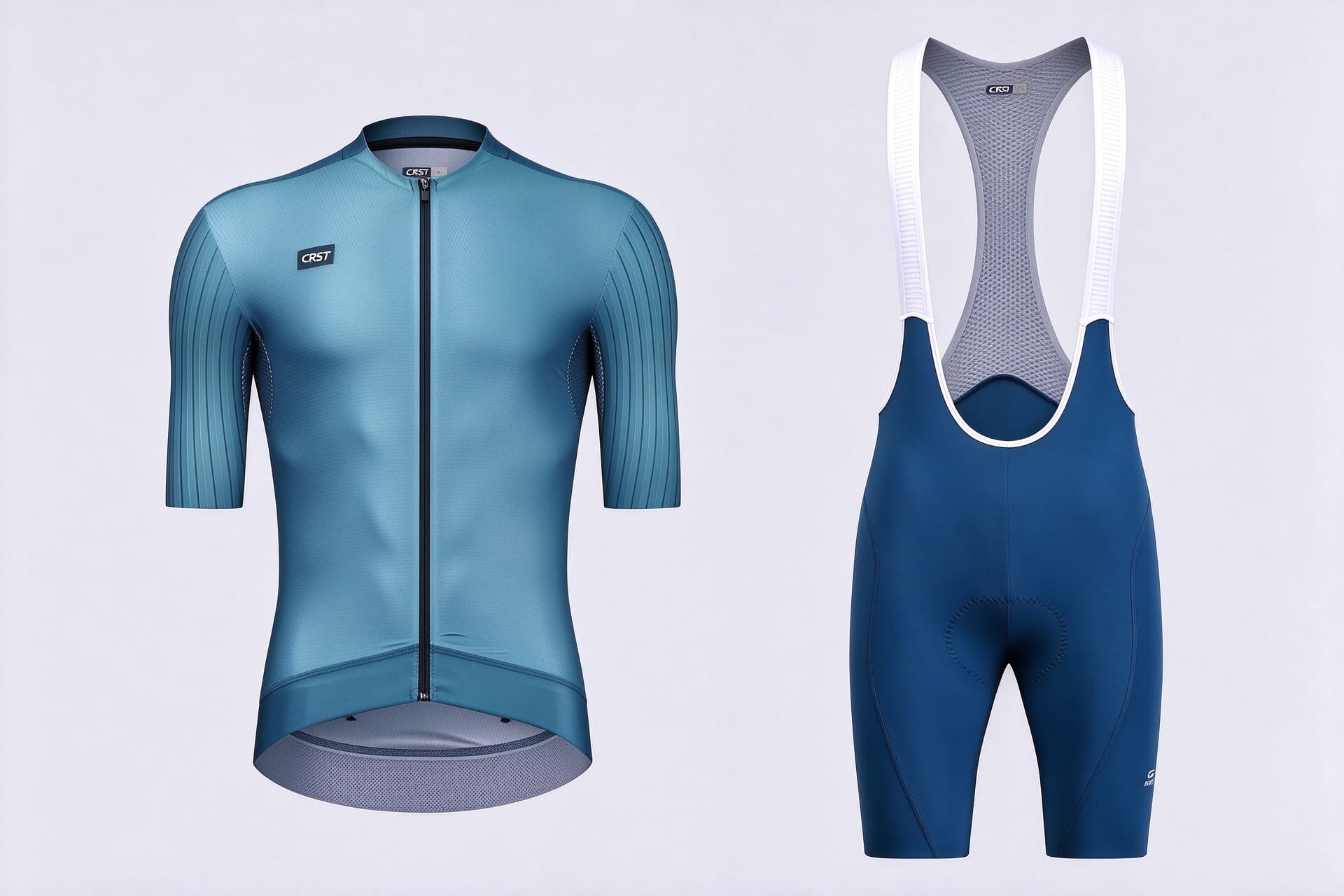
A team that mainly takes part in summer road races may only need a jersey and bib shorts. A club that trains throughout the year may also need a vest, jacket, or other seasonal apparel. The right combination depends on where and when the garments will be used.
The number of riders also matters. A small club may have a relatively simple size breakdown, while a larger team can have many sizes and several different products in the same order. Men's and women's versions may also need to be considered from the beginning.
It is worth thinking about future orders at this stage as well. If new riders are likely to join later, the original product specifications should be clear enough to use as a reference for another production run.
Turn the Team Identity Into a Complete Kit Design
Once the product range is clear, the team identity can be applied across the collection.
The main elements usually include team colors, logos, sponsor graphics, rider names, numbers, and other graphics. The goal is not simply to make one attractive jersey. The different garments should still look like parts of the same team kit when they are worn together.
Sponsor placement can become more complicated when several partners are involved. A logo that fits easily on a jersey may need a different treatment on bib shorts or a jacket because the available panel area is different. These details are better resolved during design rather than after the sample has been made.
The shape of the garment also needs to be considered. A graphic that looks balanced on a flat design file can change once it is placed across curved panels or near seams. For this reason, the design should be checked as a garment rather than only as a graphic.
Make the Artwork Ready for Production
A finished design on a screen is not always enough for a manufacturer to produce the garment.
The artwork needs to show where the logos and graphics should go and how the design should be applied to each product. If the same team identity is being used across a jersey, bib shorts, vest, and jacket, each product may require its own artwork because the panels and proportions are different.
Colors should also be clearly defined, especially when the team expects the same color to appear across several garments. Small differences can become noticeable when the products are worn together.
This is also the stage to check sponsor logos and other important details. If a sponsor changes its logo or requests a different position after sampling has started, the artwork may need to be revised and the sample repeated.
For a more detailed explanation of production artwork, see our guide to preparing artwork for custom cycling jersey printing.
Choose Fabrics Based on How Each Product Will Be Used
A complete team kit does not necessarily need to use the same fabric for every garment.
A jersey used for warm-weather riding may need good ventilation and moisture management. Bib shorts have different requirements because they need to stretch with the rider and provide a comfortable fit during long periods in the saddle. A vest or jacket may need greater protection from wind or changing weather.
The fabric should therefore be considered together with the garment construction. Panel layout, seams, pockets, zippers, cuffs, and other components can all affect the finished product.
For a team ordering several products, the important point is to select materials according to the purpose of each garment while keeping the collection consistent in appearance and quality.
Confirm the Fit Before the Full Order
Sizing is one of the areas that can become difficult when a kit is made for a whole team.
Riders do not all have the same body shape, and they may not have the same preference for fit. One rider may prefer a close racing fit while another may be more comfortable in a less restrictive fit.
A size chart gives the team a starting point, but it does not always tell the whole story. Sample garments can be tried by representative riders before the bulk order is made. This can reveal issues with garment length, tightness, sleeve position, leg openings, or other fit details.
The same point applies when the kit includes men's and women's products. The two versions should be checked as separate products rather than assuming that one sizing approach will work for both.
Finding these issues during sampling is much easier than correcting them after the complete team order has been produced.
Use the Sample to Check the Real Garment
The sample is where the design can be judged as an actual piece of cycling apparel.
A sponsor logo may look correctly positioned in the artwork but appear slightly different on the finished garment. A graphic may also need adjustment when it crosses different panels. Colors should be checked on the actual fabric, and the fit should be reviewed by someone who represents the intended wearer.
The sample review should look at both appearance and construction. Zippers, pockets, seams, cuffs, leg openings, and other functional details should work as expected.
If something is not right, the changes should be made before approval. The final approved sample then becomes an important reference for the bulk order.
This is one reason why sample approval should not be treated as a simple formality. It is the point where design decisions are checked before they are repeated across a much larger production quantity.
Move From an Approved Sample to Bulk Production
Once the sample has been approved, the production team needs a clear final reference.
The approved artwork, fabric, measurements, construction details, colors, quantities, and other product requirements should all match the version that was sampled. Earlier design versions should not be used as production references by mistake.
This becomes especially important when several products are produced as one collection. The jersey, bib shorts, vest, and jacket may use different construction methods, but their colors, logos, and main graphics should remain consistent.
Bulk production also needs its own quality checks. Measurements, printing, stitching, materials, and other details should be checked against the approved specifications rather than judged only by general appearance.
For larger team orders, the size breakdown should also be checked carefully. A production order can be correct in total quantity but still cause problems if the quantities of individual sizes are wrong.
Keep the Approved Specifications for Future Orders
The first production does not always have to be the last one.
Teams often need additional garments when new riders join, existing riders need replacements, or a new season begins. If the original production information is kept properly, a reorder does not need to start from the beginning.
The final artwork, fabric specifications, measurements, construction details, and approved sample can provide a reference for the next order. This is particularly useful when the team wants to keep the same design for several seasons.
Reorders can still require adjustments. A new product may need different artwork, a fabric may no longer be available, or the team may decide to update part of the design. Having the original specifications available makes these changes easier to manage.
What Should Be Settled Before Bulk Production?
Before the production order is released, the team and manufacturer should have the same understanding of the final product.
The product range, design, artwork, fabric, sizing, fit, quantities, and construction details should all be confirmed. The sample should also represent the version that the team actually wants to produce.
If major questions about the design or fit are still open, it is better to resolve them before bulk production begins. Once an approved specification is in place, the manufacturer has a clear reference for producing the complete order.
From a Team Concept to a Production-Ready Kit
Developing a cycling team kit is not simply a matter of putting a logo on a jersey. The product range, design, artwork, fabric, fit, and production details all need to work together.
The most useful approach is to make the important decisions before the bulk order starts, then use the approved sample and specifications as the reference for production. This can reduce unnecessary revisions and make future reorders easier to manage.
For cycling teams, clubs, brands, and distributors, Tarstone supports custom cycling apparel development through OEM and ODM production, including product development, artwork coordination, sampling, and bulk manufacturing.
Building a cycling team kit is a full development workflow instead of just graphic design work.
Start by confirming the product lineup and team requirements, then unify team identity across the whole collection. Prepare production-ready artwork, select suitable fabrics, verify fit via sampling, lock final specs before mass production and archive records for future reorders.
Following this standardized process helps teams avoid costly revisions after bulk production and ensures consistent quality for every rider.
Ready to develop your custom cycling team kit? Tarstone offers full OEM & ODM service for team cycling apparel, covering design, artwork, sampling and mass production.
Contact us to discuss your custom cycling apparel project and request a manufacturing quotation.
Email: amytong@tarstone.com
WhatsApp: +86 150 5417 8785
Website: www.tarstone.com
How to Choose a Cycling Apparel Manufacturer for Your Brand
How Cycling Apparel Manufacturers Control Quality During Bulk Production