Developing Women's Cycling Apparel
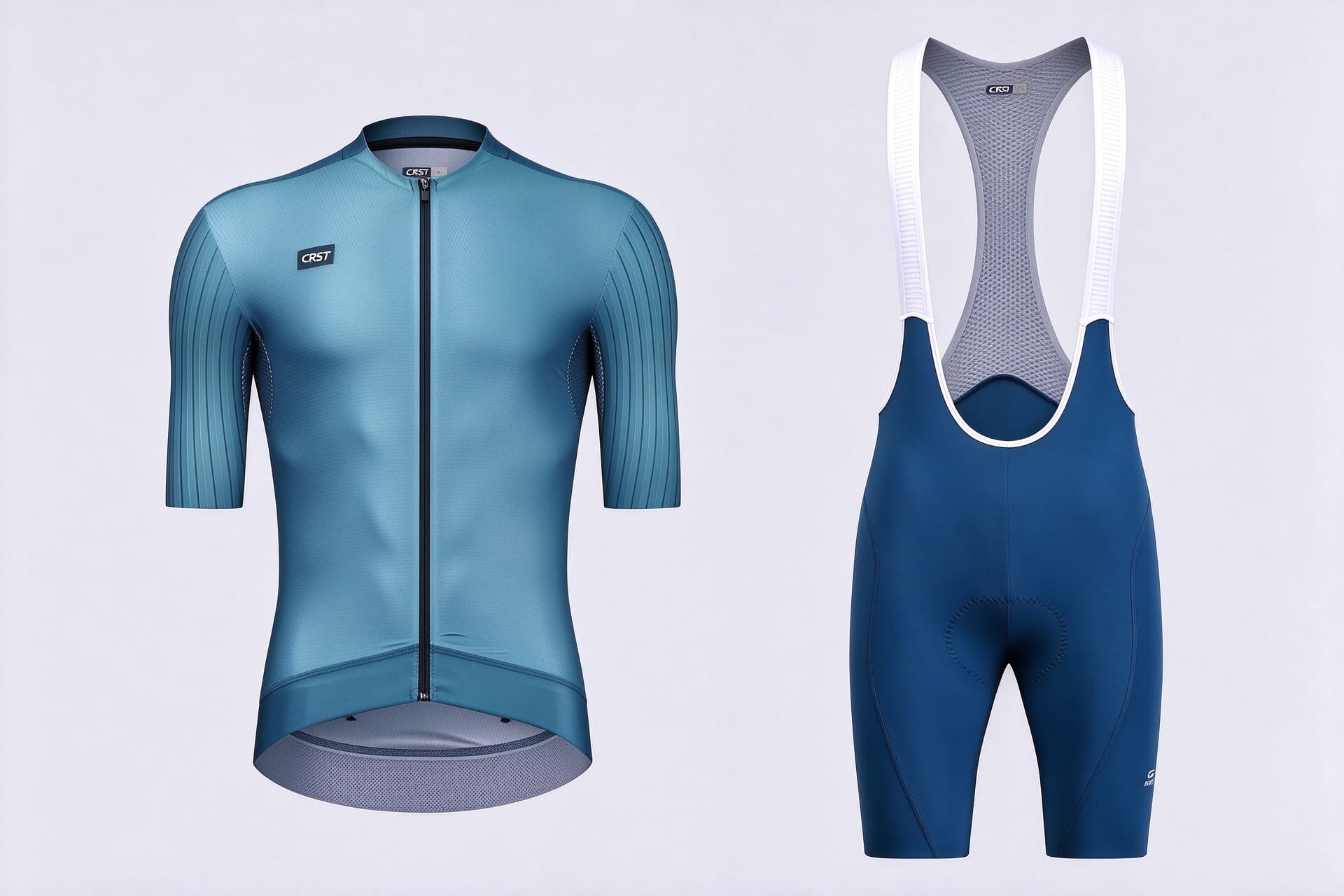
Developing women's cycling apparel involves more than adapting an existing men's design. A jersey may look right on a hanger and fit comfortably when standing, yet feel quite different once the rider leans forward on the bike. The same is true of bib shorts, where strap placement, leg length and chamois position can affect how the garment feels during a ride.
For a brand developing a women's range, these are practical design questions that need attention from the beginning. The pattern, fabric and construction all need to work together to create garments that fit the intended riders and perform as expected on the bike. Getting these elements right during development also helps brands establish a consistent fit across their product range.
Women's Cycling Apparel Is More Than a Smaller Men's Design
Using an existing men's pattern as a starting point can save development time, but simply reducing the measurements does not always produce a good fit for women. Differences in body proportions can affect how a garment sits and moves, even when the overall design looks similar.
On a cycling jersey, the chest, waist and overall body length all influence the fit. A jersey may sit comfortably around the shoulders but feel restrictive across the chest, or it may fit well while standing but shift out of place when the rider leans forward. These issues are not always solved by choosing a larger size. The pattern itself may need adjustment.
Bib shorts bring different considerations. The relationship between the waist, hips, thighs and leg openings affects how the shorts fit and stay in place. A pattern that works well for one group of riders may need changes for another, even if both groups wear the same nominal size.
This does not mean every women's garment needs a completely new design. Some elements of an existing pattern may still work, but the proportions should be checked against the intended fit. The aim is to develop women's cycling clothing that suits the target riders rather than simply reproduce an existing design in different sizes.
How a Jersey Fits When Riding
A cycling jersey needs to fit in the riding position, not just when the wearer is standing upright. Leaning forward changes how the fabric sits across the torso, shoulders and sleeves, so a sample that looks good in a fitting room may behave differently on the bike.
The front and back lengths are a good example. When a rider bends forward, the front of the jersey may rise while the back needs to maintain coverage. If the proportions are not right, the garment can feel restrictive around the abdomen or leave too much of the lower back exposed.
Sleeves also need to work with the rider's position. A sleeve that appears long enough when the arms hang naturally may pull across the shoulders when the rider reaches for the handlebars. The sleeve shape, shoulder construction and fabric stretch all influence how much freedom of movement the jersey provides.
The hem deserves the same attention. If a jersey repeatedly rides up during a ride, tightening the hem may help in some cases, but the cause could also be the garment's length or proportions. The fit should be checked on the bike before the pattern is changed.
For brands developing women's cycling apparel, a riding-position check can reveal problems that are easy to miss during a standing fit assessment. Feedback is more useful when riders can point to a specific issue, such as a sleeve that pulls when reaching forward or a hem that shifts during a ride.
The Details That Make a Difference
Once the overall fit is established, smaller construction details can have a noticeable effect on how the garment feels. They may not stand out in a product photograph, but they can influence comfort and stability during repeated use.
On a jersey, the sleeve opening needs to work with the fabric and intended fit. An opening that is too restrictive may feel uncomfortable, while one that is too loose may not stay in place as intended. The hem should help keep the jersey in place without feeling uncomfortably tight.
Panel placement matters as well. Different panels may use fabrics with different levels of stretch or ventilation, so their position needs to suit both the pattern and the intended function. If the fabric changes between panels, the way those pieces fit together can affect how the jersey sits on the body.
Bib shorts require particular attention because several components work together. The straps need to provide suitable support without pulling uncomfortably when the rider moves. The leg openings should stay in place without creating excessive pressure, and the shorts need to accommodate the rider's movement throughout the pedal stroke.
The chamois is another important part of this relationship. Its shape and position should be considered alongside the shorts pattern and intended riding position. Choosing a chamois in isolation does not guarantee a good result if it does not sit correctly in the finished garment.
A change to the shorts pattern can affect where the chamois sits, just as a change in fabric stretch can alter the feel of a jersey sleeve. Checking these details on the finished sample helps reveal problems that may not be obvious when reviewing individual components.
How Fabric Choice Changes the Final Fit
Two jerseys made from different fabrics can fit and feel different even when they use the same pattern. Fabric selection is therefore an important part of product development, not simply a decision about appearance or cost.
A stretchier fabric may sit closer to the body, while a firmer material can feel more structured. Neither option is automatically better; the choice depends on the garment's intended fit and how the fabric behaves during movement.
Recovery matters, too. After a fabric stretches, its ability to return towards its original shape affects how the garment behaves over time. This is particularly relevant in areas that experience repeated movement or tension, such as sleeves, waistbands and leg openings.
Fabric weight and thickness can also influence the finished garment. A lightweight material suited to a summer jersey may not provide the same feel or structure as a heavier fabric intended for cooler conditions. The pattern, seams and finishing details may need to be reviewed when the material changes.
For brands, the practical point is to evaluate fabric and pattern together. If a material is changed after the sample has been approved, the fit should be checked again. A fabric that looks similar to the original may behave differently once it is cut, sewn and worn.
The choice should also reflect the type of product being developed. A close-fitting race jersey and a more relaxed club jersey may have different requirements, even when both are designed for women. Establishing the intended fit early makes it easier to assess whether a proposed fabric is suitable for the product.
Getting the Sizes Right Takes More Than One Sample
A well-fitting sample is a useful starting point, but it does not confirm that every size in a women's cycling clothing range will fit as intended.
Grading a pattern creates a size range, but the fit still needs to be checked across that range. If a particular size shows excessive pulling or loose areas during fitting, the pattern may need adjustment in those areas.
For a jersey, the areas worth reviewing may include the chest, shoulders, waist, sleeve length and overall body length. For bib shorts, the hips, thighs, leg openings and strap length may need closer attention. The relevant measurements depend on the product, so the same checklist will not suit every design.
Fit feedback is most useful when it identifies a specific issue. Instead of reporting that a sample feels too tight, the fit review should establish where the problem occurs. Is the jersey pulling across the chest, restricting the shoulders or riding up at the back? For bib shorts, does the leg opening feel restrictive, or do the straps pull when the rider bends forward?
The person trying on the sample also matters. Feedback from riders who match the intended customer group is more useful than relying on a single fit model to represent everyone. Different body proportions and riding habits can reveal issues that might otherwise be missed.
The goal is not to make every size feel identical. It is to maintain the intended fit and function across the range, with adjustments where the design requires them. Reviewing the size range before production helps the brand identify issues while changes can still be made.
What to Confirm Before Bulk Production
Once the design and sample are close to the intended result, the next step is to make sure the product requirements are clear before bulk production begins.
The approved sample provides an important reference, but it should be supported by the final specifications. These may include the size chart, fabric selection, panel construction, seam details, graphics and any agreed changes made during sample review.
Artwork deserves attention, particularly for sublimated garments. Graphics need to be positioned in relation to the actual panels and garment shape, rather than judged only from a flat design image. Changes to the pattern or panel layout may affect how the artwork appears on the finished product.
The same applies to fabric substitutions and construction changes. If a component changes after approval, the brand and manufacturer should review whether the change affects the fit, appearance or intended function. A seemingly minor adjustment can have a wider effect on the finished garment.
Before bulk production, the brand and manufacturer should agree on the final sample, measurements, materials and construction details. Any changes made after sample approval should be documented and checked before production proceeds.
For brands working with an OEM or ODM manufacturer, clear specifications help translate the original design into a product that can be reproduced consistently. Both sides need to understand not only what the garment should look like, but also how it is intended to fit and function.
Bringing the Design Together
Developing women's cycling apparel requires the pattern, fabric and construction to work together in the riding position. For brands working with an OEM or ODM manufacturer, clear product specifications and an agreed final sample provide a practical basis for moving from product development to bulk production.
Women’s cycling apparel cannot be created simply by scaling down men’s patterns. Unique body proportions demand custom pattern tuning for jerseys and bib shorts, with fit testing completed in a forward riding posture rather than only standing fit checks.
Every element interacts: panel layout, fabric stretch & recovery, bib strap geometry, chamois placement and size grading all shape comfort and performance. Even approved samples require cross-size validation and artwork alignment before mass sublimation and production.
Tarstone supports full-cycle OEM & ODM development for women’s cycling apparel: custom women cycling jerseys, bib shorts, fit iteration, sublimation artwork adaptation and bulk manufacturing for cycling brands and teams.
Ready to start your women cycling apparel line? Request formal quotation today.
Email: amytong@tarstone.com
WhatsApp: +86 150 5417 8785
Website: www.tarstone.com