What Makes Professional Cycling Gloves Different From Regular Sports Gloves
Cycling gloves are often seen as a simple accessory, but in real riding conditions, they play a much more important role than many riders realize. During long-distance cycling, the hands are exposed to constant pressure, vibration, and grip tension that gradually affect comfort and control. Unlike casual sports activities, cycling requires a fixed hand position on the handlebars for extended periods, which creates a unique set of physical demands.
Understanding why cycling gloves matter is essential for both riders and cycling brands because they directly influence riding comfort, stability, and long-term performance.
Why Cycling Gloves Are Necessary in Real Riding Conditions
The need for cycling gloves comes from the continuous interaction between the rider's hands and the bicycle. During riding, the hands are responsible not only for steering but also for absorbing road feedback and maintaining stability. Over time, vibration from uneven road surfaces is transmitted directly into the palms and fingers.
This repeated micro-stress can lead to discomfort, reduced grip efficiency, and in some cases, numbness caused by pressure on sensitive areas of the hand. These effects become more noticeable during longer rides or on rough terrain where vibration levels are higher.
Cycling gloves are designed to reduce this direct impact by creating a protective interface between the hand and the handlebar. This helps distribute pressure more evenly and reduces localized stress, allowing riders to maintain better control and comfort over longer durations.
This is the core reason why cycling gloves are considered essential in performance riding environments.
Cycling Gloves Benefits for Long-Distance Comfort and Control
The benefits of cycling gloves go beyond simple hand protection. One of the most important functions is vibration reduction. By absorbing part of the road impact, gloves help reduce fatigue in the hands, wrists, and forearms, especially during extended rides.
Another important benefit is grip stability. During long rides, sweat and environmental conditions can affect how securely a rider holds the handlebars. Cycling gloves improve friction control, ensuring a more consistent grip under different riding conditions.
They also help maintain comfort by reducing pressure concentration in specific areas of the palm. Instead of allowing force to build up in one spot, pressure is distributed across padded zones, which reduces discomfort during long-duration cycling.
These combined effects make cycling gloves an important factor in maintaining both performance and endurance.
What Padded Cycling Gloves Actually Do in Riding Performance
Padded cycling gloves are designed with engineered cushioning zones placed at specific pressure points on the palm. These areas are identified based on how the hand naturally interacts with handlebars during riding.
The padding materials, commonly made from foam or gel-based structures, serve two main purposes. First, they absorb vibration generated from road surfaces. Second, they reduce direct pressure on sensitive parts of the hand, especially during sustained grip positions.
However, padding effectiveness depends heavily on its placement and density. If padding is too thick or incorrectly positioned, it can reduce handlebar sensitivity and negatively affect control precision. This is why professional cycling gloves require careful engineering rather than simple cushioning.
In well-designed products, padding works as part of a complete system that balances protection, comfort, and control.
How Material and Construction Affect Cycling Gloves Performance
Beyond padding, material selection and construction quality significantly influence glove performance. Breathability is one of the key factors, especially in warm conditions where heat and moisture can accumulate inside the glove during long rides.
Ventilated fabric structures and moisture-wicking materials help regulate temperature and maintain comfort. At the same time, palm durability is critical because this area experiences constant friction against handlebars or grip tape.
Reinforced stitching and abrasion-resistant materials are often used to extend product lifespan under repeated stress conditions. Fit design is also important, as gloves must conform closely to the hand without restricting movement or reducing tactile feedback.
These engineering elements determine whether cycling gloves can maintain consistent performance over time.
Why Design Quality Matters in Cycling Gloves Development
Cycling gloves are not simply textile products; they are performance components that require precise design control. Small changes in material density, stitching placement, or panel structure can significantly affect how the glove performs during riding.
This level of detail becomes even more important in long-distance cycling, where small discomforts accumulate over time and directly affect endurance and control stability.
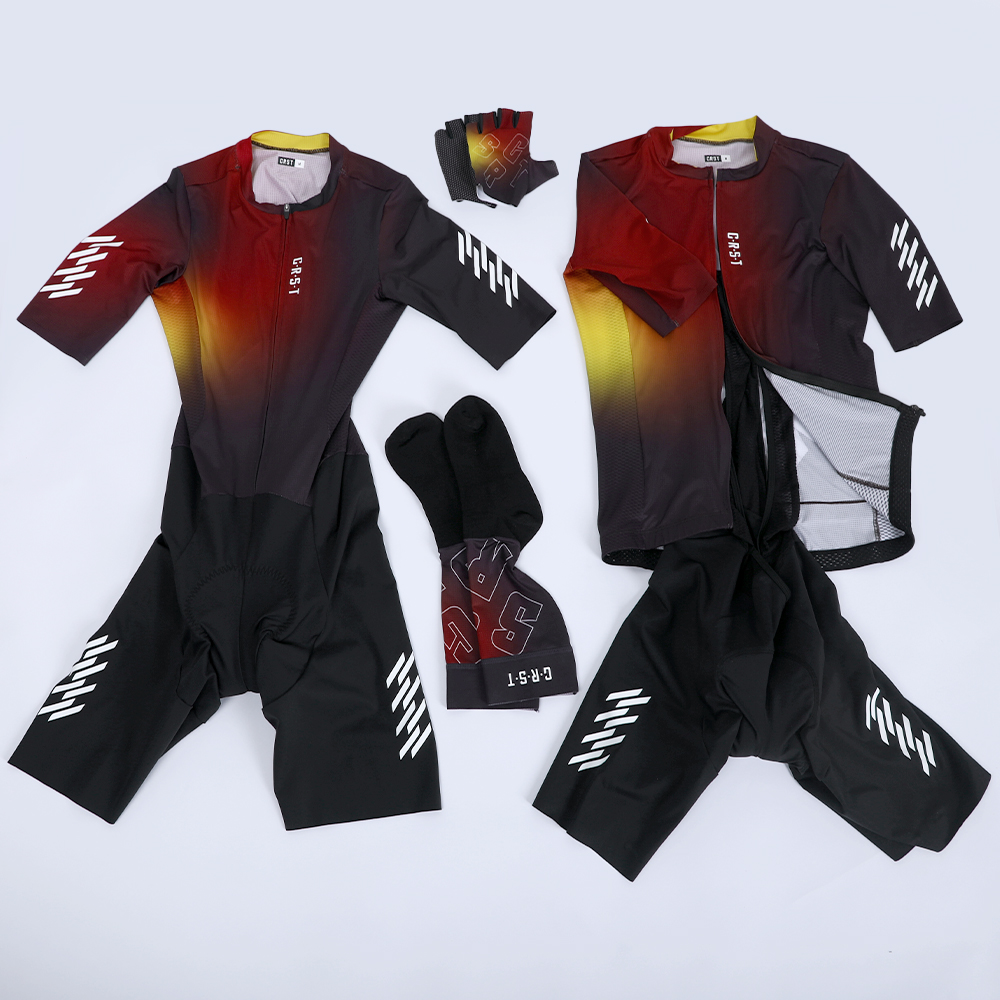
For cycling brands, maintaining consistent quality across different production batches is also essential, especially when gloves are part of a complete team kit system that includes jerseys, bib shorts, and other apparel items.
Custom Cycling Gloves for Teams and Cycling Brands
For cycling teams and apparel brands, gloves are not only functional equipment but also part of a unified visual identity system. Custom cycling gloves allow brands to align design, color schemes, and logo placement across their entire cycling kit.
In addition to branding, customization also involves technical decisions such as sizing, distribution, padding configuration, and material selection based on target riding conditions. These factors must be carefully balanced to ensure that performance is not compromised during bulk production.
Working with a cycling apparel manufacturer that understands both performance requirements and production consistency helps ensure that custom cycling gloves meet the expectations of both riders and brands.
Cycling gloves are an essential part of performance riding because they directly impact comfort, control, and endurance. Their primary function is to reduce vibration, improve grip stability, and distribute pressure more evenly across the hands during long-distance riding.
The benefits of cycling gloves become especially clear when riding duration increases, as small improvements in comfort and stability can significantly influence overall performance.
Padded cycling gloves further enhance this function through engineered cushioning systems that balance protection and handlebar sensitivity.
For cycling teams and brands, understanding these factors is important not only for product selection but also for developing consistent, high-quality cycling apparel systems that meet real-world riding demands.
Contact us to customize performance cycling gloves with tailored padding, fabrics and brand logo solutions for your team.
Email: amytong@tarstone.com
WhatsApp: +86 150 5417 8785
Website: www.tarstone.com
How Chamois Padding Affects Cycling Bib Short Performance
How to Choose Cycling Base Layers for Different Riding Conditions