Sublimation vs Heat Transfer for Cycling Apparel: Which Printing Method Should Brands Choose?
For brands developing custom cycling jerseys, choosing the right printing method is an important part of custom cycling jersey printing. The decision between sublimation and heat transfer depends on the fabric, artwork, coverage, garment construction, personalization requirements, and intended use of the finished product.
For cycling brands, teams, clubs, and other buyers developing custom apparel, these two printing methods can serve different purposes. Sublimation is often suitable for large areas of full-color graphics, gradients, patterns, and coordinated artwork across multiple garment panels. Heat transfer can be more practical when customization is concentrated in specific areas, such as rider names, numbers, sponsor logos, or other localized details.
Understanding the differences between these cycling apparel printing methods can help brands make a more suitable decision during product development and sampling.
Start With the Fabric
The printing process should be considered together with the fabric because the material affects how the artwork behaves during production and how the finished garment looks and feels.
Many performance cycling jerseys use polyester-based fabrics, which can work well with dye sublimation. In sublimation printing, the dye is transferred into suitable fabric fibers under heat and pressure rather than forming a conventional printed layer on the surface.
Heat transfer works differently. A transfer material or printed transfer layer is applied to the garment surface using heat and pressure. Depending on the transfer type and fabric, the finished surface may have a different feel and behavior from sublimated graphics.
For this reason, fabric composition, stretch, surface structure, garment construction, and intended use should all be considered before the printing process is finalized. A method that works well for one cycling jersey may not be the best choice for another product with different materials or design requirements.
How Does Dye Sublimation Printing Work?
Dye sublimation is commonly used for custom performance apparel because it allows graphics to become integrated with suitable fabric rather than remaining as a conventional surface print.
The process starts with artwork prepared according to the garment pattern and production requirements. The design is then printed onto transfer paper and applied to the fabric using controlled heat and pressure, allowing the dye to move into the fabric fibers.
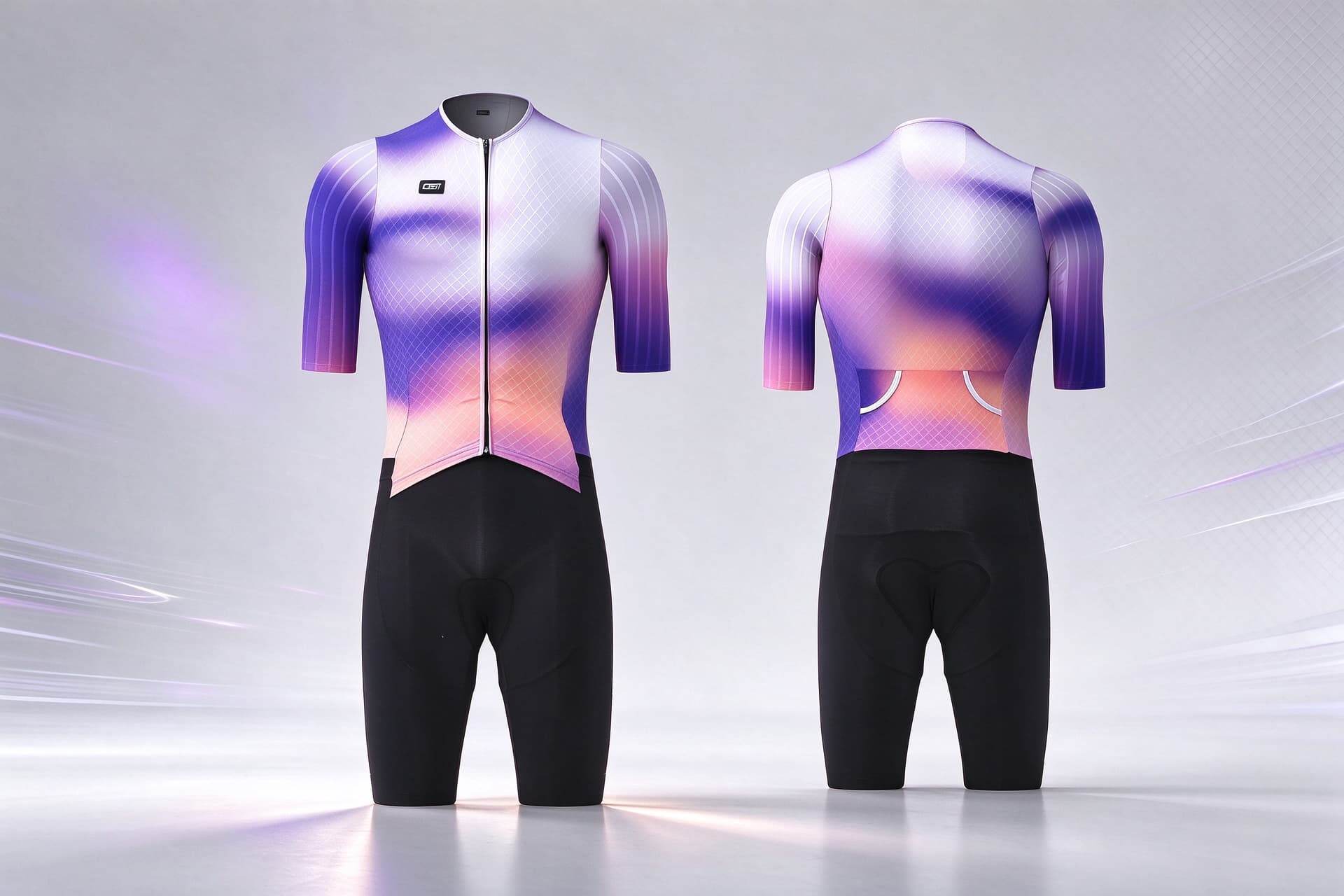
This makes sublimation particularly useful for custom cycling jersey printing when the design requires full-coverage graphics, multiple colors, gradients, detailed patterns, team designs, sponsor graphics, or artwork across several garment panels.
For brands developing a highly customized cycling jersey, sublimation provides considerable freedom for building the visual design across the garment. However, sublimation should not automatically be considered the best solution for every project. The actual fabric, artwork, construction, and product requirements still need to be evaluated together.
How Does Heat Transfer Printing Work?
Heat transfer printing applies a transfer material or printed transfer layer to the garment surface using heat and pressure.
Unlike all-over sublimation, heat transfer is often used for more localized customization. Typical applications include rider names, numbers, small logos, sponsor details, and other individual graphics.
For example, a cycling team may use the same jersey design for every rider but require a different name and number on each garment. In this type of custom cycling jersey printing, heat transfer can provide a practical way to add individual details without changing the complete jersey artwork.
It can also be useful when only a specific area of an established jersey design needs additional branding or personalization. The final result depends on the transfer material, fabric, placement, stretch, and intended use, so the application should be evaluated on the actual garment rather than judged only from a flat graphic.
Sublimation vs Heat Transfer for Cycling Apparel
The main difference between these two cycling apparel printing methods is how much of the garment needs to be customized and how the artwork should work with the fabric.
Sublimation is generally better suited to large or all-over designs. It can work particularly well when a jersey contains complex graphics, gradients, multiple colors, repeating patterns, or artwork that extends across the front, back, sleeves, and other panels.
Heat transfer is often more suitable for localized customization. Names, numbers, small logos, sponsor details, and individualized graphics are typical examples.
The surface characteristics can also differ. Sublimated graphics become integrated with suitable fabric fibers, while heat-transfer applications add a separate layer to the garment surface. The actual feel and behavior depend on the specific material and application.
Neither method is automatically better for every cycling apparel project. The right choice depends on the fabric, artwork coverage, garment construction, personalization requirements, and intended use of the finished product.
How Printing Method Affects Cycling Jersey Development
Printing should be considered during product development rather than treated as the final decorative step.
Fabric and Printing Compatibility
The selected material needs to work with the printing process. This is particularly important for performance cycling jerseys, where the fabric may stretch significantly during use. A printing method that looks correct when the jersey is laid flat may behave differently once the fabric is stretched around the rider's body.
Artwork and Panel Construction
A custom cycling jersey is made from multiple panels rather than a single flat surface. Artwork therefore needs to be developed together with the garment construction. Seams, sleeves, pockets, zippers, and other components can interrupt graphic elements or change how a design appears after assembly.
This becomes especially important for sponsor graphics, repeating patterns, and artwork that needs to align across different panels.
Color and Final Appearance
The colors shown on a digital screen do not necessarily appear exactly the same once they are reproduced on fabric. The final appearance can be influenced by the fabric, printing process, and production conditions.
For brands that require consistent colors across a collection, the physical sample should therefore be reviewed rather than relying only on digital artwork.
Fit, Stretch and Surface Feel
The printing method also needs to work with the movement of the finished jersey. Cycling apparel stretches as the rider changes position. This is particularly relevant to surface-applied transfers, where the additional layer may affect the feel of the fabric when stretched.
The actual garment should therefore be evaluated while worn, rather than judged only when it is placed flat on a table.
How to Evaluate Printing Before Bulk Production
The printing process should ideally be confirmed through a physical sample rather than selected only from digital artwork.
First, review the overall visual result. Colors, logos, patterns, and sponsor graphics should be checked on the actual garment.
Placement should also be examined where artwork crosses seams, pockets, sleeves, zippers, or other construction points. A design that looks balanced on a digital template can appear different after the garment has been cut and assembled.
The printed surface should then be evaluated for appearance and feel. For heat-transfer graphics, consider how the transfer behaves when the jersey stretches. For sublimated artwork, review color consistency across different garment panels.
Fit and construction should be evaluated at the same stage. A design element that looks correct when the jersey is flat may appear different once the garment is worn in the intended riding position.
Before bulk production begins, the approved sample, artwork, fabric, measurements, construction details, and printing method should provide a clear reference for the production order.
How Should Brands Choose a Cycling Apparel Printing Method?
The most practical way to choose among cycling apparel printing methods is to start with the finished product rather than the technology itself.
Sublimation is often a strong option when the project requires full-garment artwork, complex graphics, gradients, multiple colors, and coordinated designs across several panels, particularly when the garment uses a suitable polyester-based fabric.
Heat transfer may be more practical when the project mainly requires names, numbers, small logos, or localized personalization.
If neither process fits the fabric or artwork requirements, another printing method may be worth considering based on the specific product.
For brands planning custom cycling jersey printing, the key is to select the printing process together with the fabric, artwork, construction, fit, personalization requirements, and intended use of the garment.
Printing is therefore part of product development, not simply a final decoration step.
Frequently Asked Questions
Is sublimation better than heat transfer for cycling jerseys?
Not in every situation. Sublimation is often well suited to large-area and all-over cycling jersey graphics, while heat transfer can be more practical for localized customization such as names, numbers, and small logos. The appropriate choice depends on the fabric, artwork, and product requirements.
Can heat transfer be used for custom cycling jersey printing?
Yes. Heat transfer can be used when the transfer material, fabric, placement, stretch requirements, and intended use of the garment are compatible with the application.
Is sublimation suitable for polyester cycling jerseys?
Sublimation is commonly used with polyester-based performance fabrics because the dye can be incorporated into the fibers during the process. The specific fabric and production requirements should still be evaluated during product development.
Which printing method is best for custom team cycling jerseys?
For team jerseys with full-color artwork across most of the garment, sublimation is often a strong option. Heat transfer can be useful for individual rider names, numbers, or localized sponsor details.
Should the printing method be confirmed before sampling?
Yes. The printing process can affect fabric selection, artwork, color appearance, construction, surface feel, and the finished product. Evaluating these elements together during sampling gives the brand a clearer basis for approving the product.
Sublimation and heat transfer are not simply two printing methods where one is always better than the other. Their suitability depends on the fabric, artwork, coverage, construction, personalization requirements, and intended use of the cycling apparel.
Sublimation can be particularly useful for custom cycling jerseys that require large-area graphics, complex artwork, and coordinated designs across multiple garment panels. Heat transfer can provide greater flexibility for names, numbers, logos, and other localized personalization.
For brands developing a new cycling apparel collection, selecting the printing method during product development can help create a clearer path from artwork and fabric selection to sampling and bulk production.
Contact us to discuss your custom cycling apparel project and request a manufacturing quotation.
Email: amytong@tarstone.com
WhatsApp: +86 150 5417 8785
Website: www.tarstone.com
Why Do Cycling Jerseys Have Three Back Pockets?
Custom Cycling Teamwear for Teams, Clubs and Brands