Why Cycling Socks Matter in Long Distance Riding
When riders think about performance cycling apparel, attention usually goes to jerseys, bib shorts, helmets, or outer layers. Socks are often treated as a minor accessory rather than an important part of the cycling kit. In reality, cycling socks play a much larger role than many riders expect, especially during long-distance riding.
On short rides, minor discomfort in the feet may go unnoticed. During long-distance cycling, however, even small issues such as heat buildup, moisture accumulation, friction, or foot instability gradually become more noticeable. Because cycling involves continuous repetitive pedaling over extended periods, the feet remain under constant pressure inside tightly fitted cycling shoes. Over time, this affects comfort, efficiency, and overall riding performance.
This is why socks for long bike rides should not be treated as ordinary sports socks. Professional cycling socks are designed to support temperature regulation, reduce friction, improve stability, and help riders maintain comfort during prolonged effort. For cycling teams, clubs, and apparel brands, high-quality socks are also an important component of a complete performance apparel system.
Why Foot Comfort Becomes Critical During Long-Distance Riding
Long-distance cycling places sustained mechanical stress on the lower body. Every pedal stroke transfers force through the foot into the pedal system, and this repeated motion continues for hours. Unlike casual movement, cycling creates highly repetitive pressure concentrated around the toes, arch, heel, and forefoot.
As ride duration increases, several problems can begin to appear inside the shoe. Heat gradually builds up due to continuous muscle activity. Sweat increases as body temperature rises. Moisture becomes trapped because cycling shoes prioritize stiffness and power transfer rather than ventilation. These factors combine to create a challenging environment for foot comfort.
When foot comfort deteriorates, riders often experience subtle performance decline. Small adjustments inside the shoe, pressure discomfort, or irritation may not seem significant at first, but over long distances, they increase fatigue and reduce riding focus. This is one reason professional riders pay close attention to every layer of their apparel system, including socks.
How Breathable Cycling Socks Improve Thermal Regulation
One of the most important characteristics of high-quality cycling socks is breathability. Breathable cycling socks are engineered to improve airflow and moisture transfer inside the shoe, helping maintain a more stable microclimate around the foot.
During long rides, the feet continuously generate heat. Without proper ventilation, warm air and sweat remain trapped, causing overheating and discomfort. Excess heat often leads to increased perspiration, while excessive moisture softens skin and increases friction.
Modern breathable cycling socks typically use technical knitting structures to improve airflow in high-heat zones. Mesh ventilation panels, lightweight yarn construction, and open-knit sections help release heat more efficiently than conventional sports socks. These structures encourage airflow while allowing moisture to move away from the skin.
Moisture-wicking fibers also play an important role. Instead of allowing sweat to remain on the skin surface, performance yarn helps transport moisture outward where it can evaporate more easily. This reduces dampness and helps maintain more consistent comfort throughout the ride.
For riders covering long distances, temperature regulation is not only about comfort. Stable thermal management helps reduce overheating stress and improves overall endurance during sustained effort.
How Performance Cycling Socks Support Efficiency and Reduce Fatigue
Beyond breathability, performance cycling socks are designed to provide structural support that improves stability during repetitive pedaling. This is where performance cycling socks differ significantly from general sports socks.
Long-distance riding places repeated stress on the arch, ankle, and lower leg muscles. As fatigue increases, small losses in stability become more noticeable. Professional cycling socks often include targeted compression zones that help support the foot and reduce unnecessary movement inside the shoe.
Arch compression is especially important. By stabilizing the midfoot area, compression zones help reduce unwanted shifting and improve foot control during pedal strokes. Supportive cuff construction also helps the sock remain secure without sliding downward during extended riding.
Compression can additionally help reduce muscle vibration. Although socks alone cannot eliminate fatigue, better structural support helps reduce minor inefficiencies caused by repeated movement. Over thousands of pedal strokes, small improvements in stability can contribute to better comfort and more consistent performance.
For endurance-focused riders, reducing energy waste is essential. Supportive sock construction helps maintain pedaling efficiency by improving alignment between the foot, shoe, and pedal interface.
Friction Management and Blister Prevention
Friction is one of the most overlooked issues during long-distance cycling. Many riders underestimate how repeated rubbing inside the shoe can affect comfort over several hours.
Even slight movement between the foot, sock, and shoe can create pressure points. Common high-friction areas include the heel, toe box, and forefoot. When moisture accumulates, friction becomes even more problematic because damp skin is more vulnerable to irritation.
This is where sock construction becomes highly important. High-quality cycling socks are designed to minimize internal movement while reducing abrasive contact points. Seamless toe construction helps eliminate irritation around the toes. Reinforced heel and toe sections improve durability while providing more stable contact surfaces.
Precise knitting density also affects friction control. Socks that bunch, wrinkle, or shift inside the shoe increase the likelihood of discomfort. Stable construction reduces unwanted movement and helps maintain consistent contact throughout the ride.
Blister prevention is not simply a comfort issue. Severe friction can negatively affect riding efficiency and may shorten training sessions or reduce performance during endurance events.
Why Material Selection Matters
Material selection has a major influence on cycling sock performance. Different yarn compositions affect moisture transfer, elasticity, durability, compression retention, and long-term wear consistency.
Common technical yarn combinations include polyester, nylon, and elastane blends. Polyester is widely used because of its fast-drying characteristics and stable structural performance. Nylon improves abrasion resistance, making it suitable for high-friction zones such as the heel and toe. Elastane contributes to stretch recovery and compression retention.
Material quality also affects long-term durability. Inferior yarns may lose elasticity after repeated washing, resulting in poor fit retention and reduced compression support. For cycling apparel brands and teams, consistent material quality becomes especially important when producing socks at scale.
The right material combination allows manufacturers to balance comfort, breathability, support, and production consistency.
What Separates Premium Cycling Socks From Standard Sports Socks
Not all sports socks are suitable for cycling. While general athletic socks may offer basic comfort, they are usually not engineered for the specific biomechanical demands of long-distance riding.
Premium cycling socks are developed with riding-specific requirements in mind. These requirements often include controlled compression, targeted ventilation mapping, reinforced pressure zones, and optimized cuff height for aerodynamic and comfort considerations.
The difference often lies in manufacturing precision. Small variations in knitting density, compression mapping, or yarn quality can significantly affect final product performance. This is why premium cycling socks require specialized production expertise rather than standard sock manufacturing alone.
For cycling apparel brands, understanding these technical differences is important when developing performance-oriented product lines.
Why Custom Cycling Socks Matter for Teams and Brands
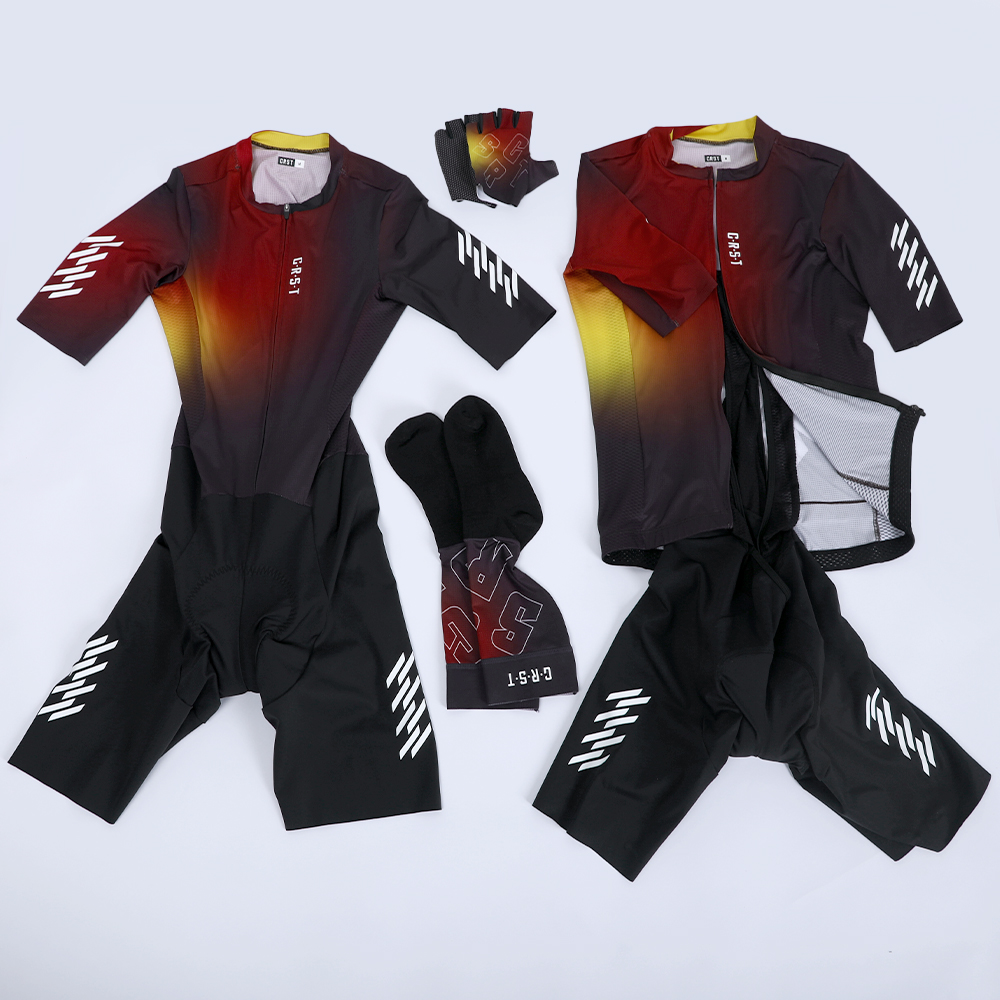
For cycling teams, clubs, and performance apparel brands, socks serve both functional and branding purposes. They are no longer viewed as simple accessories but as part of a complete coordinated kit.
Custom cycling socks allow teams to maintain visual consistency across jerseys, bib shorts, and supporting accessories. At the same time, performance requirements remain critical. Teams often need socks that deliver reliable breathability, compression support, and fit stability under demanding riding conditions.
Custom production typically involves multiple technical considerations. Sock height, logo integration, knitting structure, compression zoning, and yarn selection all influence both product appearance and functional performance. These variables also affect production complexity and manufacturing consistency.
Working with an experienced cycling apparel manufacturer helps ensure custom socks meet both performance expectations and brand requirements. Reliable manufacturing capability becomes especially important for bulk orders, seasonal reorders, and team kit consistency.
Cycling socks may appear to be a small part of the overall cycling kit, but their importance becomes increasingly clear during long-distance riding. Heat management, moisture control, compression support, and friction reduction all influence rider comfort and performance over extended periods.
As ride duration increases, small inefficiencies in foot comfort become more significant. Breathable cycling socks help regulate temperature and moisture, while performance cycling socks improve support and reduce fatigue during repetitive pedaling.
For cycling teams and apparel brands building complete performance kits, socks should not be treated as an afterthought. High-quality cycling socks contribute to comfort, efficiency, and visual consistency, making them an essential component of modern cycling apparel systems.
Contact us to customize professional performance cycling socks matching your team’s functional and branding demands.
Email: amytong@tarstone.com
WhatsApp: +86 150 5417 8785
Website: www.tarstone.com
How to Choose Cycling Base Layers for Different Riding Conditions
Why Small Cycling Brands Struggle to Scale