Performance Sportswear vs Regular Sportswear
Two sportswear garments can look quite similar while being developed around very different requirements. A simple running shirt, for example, may look much like a general sports T-shirt, but the way the two products are developed does not necessarily start from the same purpose.
Regular sportswear is often intended to work across a broader range of activities and situations. Comfort, versatility and straightforward construction may be important considerations. Performance sportswear, on the other hand, is generally developed around the requirements of a particular activity, so material, fit and construction have a closer relationship with how the garment will be used.
This does not mean regular sportswear is unsuitable for exercise, or that performance sportswear has to look highly technical. The distinction is less about appearance and more about how specifically the product has been developed around its intended use.
For brands developing sportswear, this difference matters. Performance is not created by adding one particular fabric or feature to a garment. It comes from making the different parts of the product work together for a clear purpose.
The Purpose of the Garment Comes First
The intended use has a strong influence on how sportswear is developed.
A regular sportswear shirt may need to work across different activities, so its design can focus on a versatile fit and uncomplicated construction. A garment developed specifically for a sport can take a more targeted approach because its requirements are clearer.
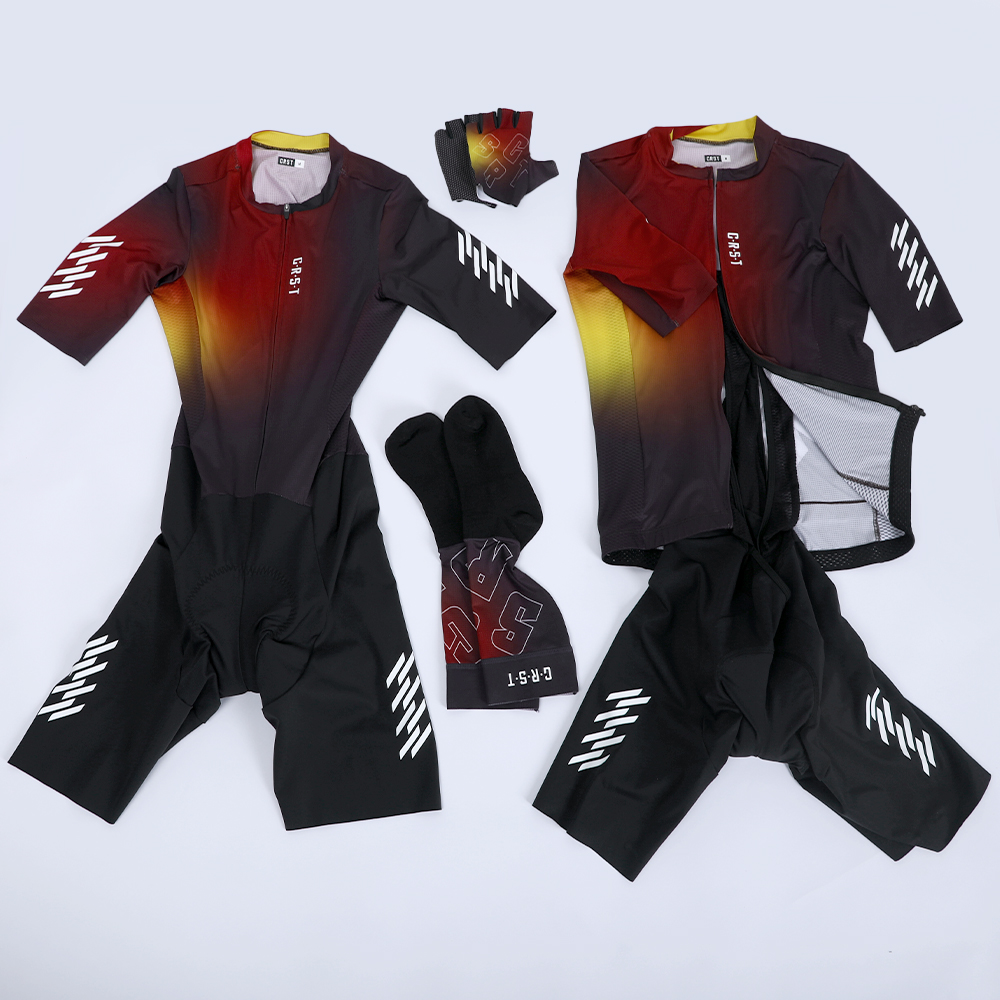
Running, cycling and triathlon provide useful examples. They are all forms of sportswear, but the garments are used in different ways. Body movement, garment position and the conditions in which the product is worn can all influence its development.
A running garment needs to accommodate repeated movement through the upper body and arms. Cycling sportswear is developed around a riding position, which changes how the garment sits across the body. Triathlon apparel has its own considerations because the product is associated with more than one activity.
The point is not that every sportswear product needs a highly specialized design. Rather, the garment should be developed according to what it is expected to do.
For a brand, establishing that purpose early gives the rest of the development a clearer direction. Material, pattern and construction can then be considered in relation to the same product requirements.
Material Choice Changes With the Product
Material is an important part of performance sportswear, but the fabric itself does not determine whether a garment is a performance product.
Weight, stretch, surface structure, hand feel and drape can all affect how a garment feels and behaves. Their importance depends on the product being developed.
A lightweight racing garment may require a different material approach from a training product intended for regular use. A long sleeve running top also has different coverage requirements from a sleeveless running singlet, even when both belong to the same running collection.
Regular sportswear can also use technical or sports-oriented materials. The difference is that performance sportswear generally considers material choice more closely in relation to a specific activity and the construction of the garment.
The material also affects how the garment needs to be developed. A fabric with more stretch may require different pattern proportions from one with less stretch. The way it falls, stretches or recovers can also change the finished fit and appearance.
This means a fabric cannot always be judged separately from the garment. A material that looks appropriate as a swatch may behave differently once it is cut, shaped and sewn into the final product.
For brands, material selection is therefore not simply a matter of choosing a fabric before production. It is part of deciding how the finished garment should work.
Fit Is Driven by Intended Use
There is no single fit that defines performance sportswear.
A racing garment may use a closer fit, while a training product may allow more room. A team garment may require a different balance because it can be worn by a wider range of people and used repeatedly throughout a season.
Regular sportswear can also be produced in close, regular or relaxed fits. What changes with performance-oriented product development is the relationship between that fit and the activity for which the garment is intended.
The finished fit also depends on more than measurements on a specification sheet. Material stretch, body proportions, sleeve shape, shoulder position and garment length can all affect how the product sits on the wearer.
This becomes particularly relevant when developing custom sportswear. A set of measurements may appear correct on paper, yet the finished product can feel different once the actual material and construction are introduced.
A performance garment therefore does not need to be tight simply to appear technical. The fit should support the purpose of the product and allow the garment to function as intended.
Construction Has to Work With the Product
Garment construction is another area where product development decisions begin to come together.
The neckline, sleeves, body proportions, seams and panels all affect the finished garment. A change in one area can influence another. Material stretch can affect pattern proportions, while a change in garment shape can affect both fit and artwork placement.
This is particularly noticeable when the same visual concept is developed across different types of sportswear.
A graphic designed for a cycling jersey may not sit in the same position on a running singlet. A long sleeve garment creates different areas for artwork from a short sleeve shirt. The visual identity can remain consistent, but the physical product still needs to be developed according to its own shape and use.
That is an important distinction between simply applying artwork to a garment and developing the garment itself.
For performance sportswear, construction should support the intended fit and material rather than being treated as a collection of separate decorative details.
More Technical Details Do Not Automatically Make a Better Product
A garment can look highly technical without being particularly well developed.
More panels, seams or visible details do not automatically make a product better suited to its purpose. The same applies to fabric selection. A material does not become the right choice simply because it is commonly associated with performance sportswear.
The value of a design detail depends on what it contributes to the product.
If a particular fit is required, the pattern needs to support it. If the material has a certain amount of stretch, the construction needs to work with that behavior. If a feature does not serve a clear purpose, adding it may increase complexity without improving the garment.
This matters when brands are developing new products because there can be a temptation to make a garment appear more advanced by adding visible technical elements.
A more complicated garment is not necessarily a better one.
In well-developed performance sportswear, the important details are usually connected to the product's purpose. The garment does not need to look complicated to have been carefully developed.
Performance Sportswear Does Not Follow One Formula
Looking across different sports makes this even clearer.
Running sportswear can include racing shirts, training tops, running singlets and long sleeve running tops. They may share the same brand identity while requiring different approaches to material, fit and construction.
Cycling sportswear has a different development context because the rider's position changes how the garment sits on the body. Garment proportions and shape therefore need to be considered differently from those of a general sports shirt.
Triathlon apparel brings another set of requirements because the product is associated with multiple activities rather than one type of movement.
The same principle applies within a single sport. A racing garment and a training garment may both be designed for running, but they do not necessarily need the same fit, material or construction.
Performance sportswear is therefore not one fixed product category with one standard set of features. Its development depends on the relationship between the garment and the activity it is intended to support.
What the Difference Means for Brands
For a brand, the distinction between regular sportswear and performance sportswear becomes especially useful when developing a product from an existing design concept.
Artwork is often one of the first things a brand has ready. Colors, graphics and logos may already be defined, but they do not determine the physical characteristics of the garment.
A brand can have the same visual direction across a running shirt, cycling jersey and triathlon garment without making the three products physically identical.
The product requirements need to be established alongside the visual direction. The intended use influences the fit and garment shape, while the material needs to work with those decisions. Artwork can then be positioned around the finished garment rather than forcing the garment to follow the artwork.
This approach becomes even more important when developing a collection. Different garments can share a common design language while using different patterns, proportions and construction details.
For example, a brand developing running sportswear may use the same graphic identity across a running singlet, short sleeve running shirt and long sleeve running top. The visual direction can remain consistent while each garment is developed according to its own requirements.
For a manufacturer, understanding this distinction is important because the same artwork or brand direction can lead to very different physical products depending on what the garment is intended to do.
A Physical Sample Helps Validate the Product
A design file and specification can communicate the intended product, but they cannot show every aspect of the finished garment.
A physical sample makes it easier to assess proportions, neckline shape, sleeve position, body length and how the selected material behaves within the actual construction.
This is particularly useful when several design decisions depend on one another. A garment may look correct in a digital file, but its proportions and material behavior can be judged more accurately once the product exists physically.
For brands developing performance sportswear, the sample provides an opportunity to check whether the intended fit, material and construction work together before moving into bulk production.
The sample is not a separate definition of performance. It is simply a point in the development process where the product decisions can be evaluated as a complete garment.
Building a Consistent Performance Sportswear Collection
A sportswear brand rarely needs to develop just one garment.
A collection may include running shirts, running singlets, long sleeve tops, cycling jerseys and triathlon apparel. These products can share colors, graphics and logo treatment without using identical construction.
For example, artwork that works across the body of a cycling jersey may need to be repositioned on a running singlet. A long sleeve product creates additional areas for artwork, while its proportions and construction differ from those of a short sleeve garment.
Trying to make every product physically identical can actually make a collection less coherent. Each garment needs enough freedom to work properly for its intended activity.
A stronger collection usually keeps the visual direction consistent while allowing the product design to change where necessary.
For brands developing multiple categories, this creates a useful balance: the collection looks like it belongs to one brand, but each garment is developed as its own product.
What Actually Makes Sportswear Performance Oriented?
Performance sportswear is not defined by a single fabric, a particular fit or a long list of technical features.
Regular sportswear can be comfortable and suitable for exercise, while performance sportswear takes the requirements of a particular activity further into the product development process.
The material is selected with the garment and its intended use in mind. The fit reflects how the product is expected to be worn and moved in. Construction supports the chosen material, shape and proportions.
None of this requires the garment to be complicated.
The more useful question for a brand is not how technical a product looks, but whether the decisions behind it make sense for the activity it is designed for.
That is the real difference between performance sportswear and regular sportswear: not the number of technical details a garment contains, but how closely its development is connected to the purpose of the product.
Performance sportswear differs from regular sportswear not by appearance, but by development logic. Every choice of material, fit and construction is built around the target sport’s movement scenarios, whether for running, cycling or triathlon.
Adding more technical panels or fancy fabrics does not guarantee better performance. Brands should define product purpose first, validate fit and material behavior with physical samples, and maintain unified brand visuals without forcing identical patterns across your apparel collection.
Tarstone delivers full‑cycle custom performance sportswear OEM & ODM service: custom running, cycling and triathlon garments, sample iteration and stable bulk production for brands, teams, clubs and event distributors.
Ready for your custom performance sportswear project? Request formal quotation today.
Email: amytong@tarstone.com
WhatsApp: +86 150 5417 8785
Website: www.tarstone.com
Related Article