How to Develop a Custom MTB Jersey
A custom MTB jersey usually starts with an idea for the look, but the artwork is only one part of the development. The jersey also needs to work in a riding position, allow enough movement, suit the conditions where it will be used and fit with the rider's other gear.
That is why developing a custom mountain bike jersey is different from simply putting a new graphic on an existing shirt. The riding style, fit, sleeve construction and fabric all affect the finished garment. Once those decisions are clear, the visual design can be developed around a jersey that is actually suited to riding.
Start With the Type of Riding
Mountain biking covers a wide range of riding. A jersey used for cross‑country riding may be worn for long periods at a steady pace, while trail and enduro riding can involve more changes in body position and more contact with the surrounding environment.
Those differences can affect the direction of the garment. A rider moving frequently around the bike needs enough room through the shoulders, back and arms. A jersey intended for warmer conditions may place more emphasis on airflow, while one intended for cooler riding may need greater coverage.
The point is not to create a completely different jersey for every type of riding. It is to establish how the garment will actually be used before making decisions about the fit, fabric and construction.
Get the Fit Right for the Riding Position
An MTB jersey does not behave the same way when a rider is standing upright as it does when they are on the bike. The upper body leans forward, the arms reach toward the handlebars and the shoulders and back are constantly moving.
A jersey that looks comfortable when standing still can pull across the shoulders or ride up at the back once the rider gets into position. Making it much looser is not necessarily the answer either. Excess fabric can move around and become distracting during riding.
The shoulder, upper back, sleeve and body length therefore need to be considered together. If the jersey is intended to be worn over protective equipment, that needs to be considered at this stage as well.
Once the fit has been established, the artwork can be developed around the actual proportions of the garment instead of trying to make the garment fit a design that was created first.
Sleeve Length Changes More Than the Look
Short sleeve and long sleeve MTB jerseys can suit different conditions, so sleeve length is part of the product decision rather than simply a visual preference.
A short sleeve jersey may make more sense for warmer riding when airflow and reduced coverage are important. Long sleeves can provide more coverage for cooler conditions or for riders who want greater protection from the surrounding environment.
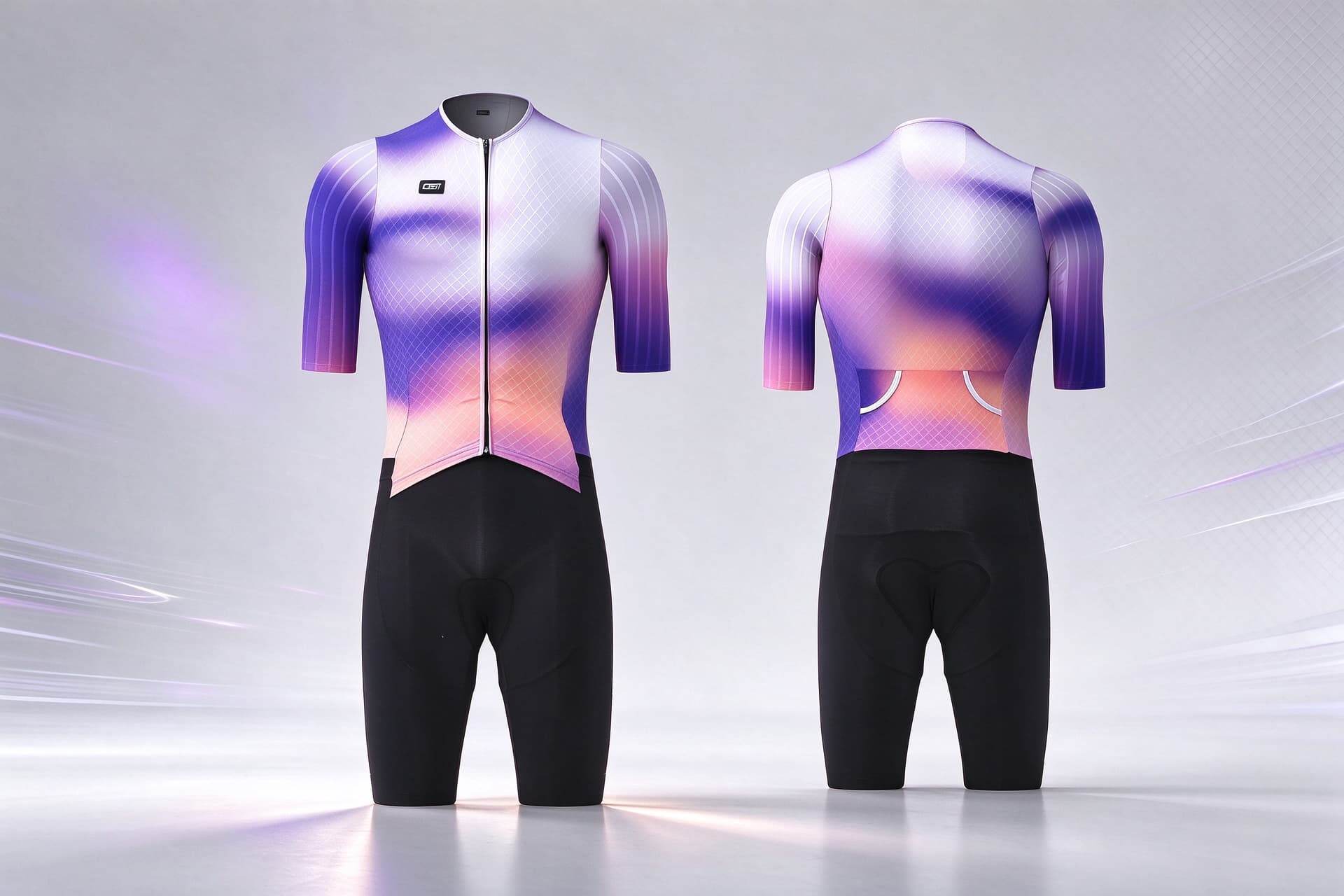
The sleeve also becomes part of the graphic layout. When artwork runs from the body onto the sleeve, the design needs to follow the shape of the garment. A graphic that looks balanced on a flat artwork file can look quite different once it wraps around the shoulder and sleeve.
For that reason, sleeve construction and artwork placement are best considered together.
Choose the Fabric for the Conditions
There is no single fabric choice that works for every MTB jersey. The material needs to suit the conditions and the way the garment will be used.
For warm‑weather riding, airflow and moisture management may be important. A jersey intended for long rides also needs to remain comfortable as the ride continues. In cooler conditions, greater coverage may become more useful.
Durability can also be a consideration for trail riding, where the garment may come into contact with branches, rough surfaces or other equipment. That does not mean every mountain bike jersey needs a heavy construction. The material should match the expected use rather than being selected simply because it is commonly used for cycling apparel.
This is why fabric selection works best when it is considered alongside the fit and overall construction.
Build the Graphics Around the Garment
Once the basic garment has been defined, the visual design can take shape.
For a team or brand, this may include brand colors, logos, sponsor marks and other graphics. These elements need to remain clear on the finished jersey, but they also have to work with the actual construction.
Seams, sleeves, collar lines and body panels can all affect where a graphic should sit. A logo that looks perfectly positioned on a flat design may end up too close to a seam or appear differently once the jersey is worn. Graphics that continue across several panels also need to be checked against the shape of those panels.
A custom MTB jersey therefore needs to be treated as a garment as well as a graphic. The artwork should work with the construction instead of forcing the construction to follow a flat image.
A Sample Shows What the Artwork Cannot
A digital mockup can show the overall appearance of a custom MTB jersey, but it cannot show everything about the finished garment.
A physical sample makes it possible to check the proportions, sleeve shape, collar, body length and artwork placement together. More importantly, the jersey can be looked at in the position in which it will actually be worn.
This can reveal things that are easy to miss on a screen. A graphic may need to move slightly because of a seam. The body may need more or less length. The sleeve may feel different once the arms are extended. These are product decisions that are difficult to make from artwork alone.
Sampling is therefore not only about checking whether the design looks right. It is an opportunity to see whether the garment itself works as intended before the specifications are taken into bulk production.
Make the Size Range Work as One Product
A team or club order brings another consideration into the development process. The same jersey design may need to cover several sizes while maintaining a consistent overall fit and appearance.
The size range should be established before bulk production rather than left until the ordering stage. Measurements and garment proportions need to remain consistent as the sizes change, while the intended fit should still make sense across the range.
This also matters when the same design is reordered. Clear sizing and garment specifications give the manufacturer a reference for future production, rather than leaving the next order dependent on an old image or a previous description.
Confirm the Product Before Production
By the time a custom MTB jersey reaches bulk production, the main product decisions should already be settled.
The garment construction, fit, fabric, artwork and size range need to be clear enough for production to follow an approved version of the product. Major changes made late in the process can affect several sizes and make it harder to keep the finished garments consistent.
A clear development stage helps separate product decisions from manufacturing. Once the sample and specifications have been approved, there is a defined product to reproduce and a clear reference for the production team.
The Development Starts With the Garment, Not Just the Artwork
A custom MTB jersey is more than a standard cycling shirt with new colors and logos. The way it will be ridden influences the fit, sleeve length, coverage, fabric and construction, while those choices in turn affect how the artwork needs to be placed.
Starting with the riding requirements makes the rest of the development easier. Instead of creating the artwork first and trying to make it work on a garment later, the jersey can be developed as one product from the beginning.
For brands, teams and clubs working on custom mountain bike apparel, this also gives the manufacturer a clearer specification to work from. When the riding purpose, fit, construction, artwork and sizing have been considered before production, the approved sample becomes a much more useful reference for the bulk order.
Custom MTB jersey development goes far beyond printing graphics onto existing shirts. Real‑world riding posture, movement and trail conditions drive fit, sleeve construction and fabric choices.
Define riding use‑case first, then lock in fit, sleeve options and material. Design artwork around garment seams and panels, validate performance with physical samples, and finalize full‑range sizing before bulk manufacturing.
Tarstone delivers full‑cycle custom MTB apparel OEM & ODM service: custom mountain bike jerseys, pants, shorts, sample iteration and stable bulk production for MTB teams and outdoor sport brands.
Ready to develop your custom MTB jersey? Request formal quotation today.
Email: amytong@tarstone.com
WhatsApp: +86 150 5417 8785
Website: www.tarstone.com