Why Triathlon Suits Are Different From Regular Sportswear?
Triathlon is a high-intensity endurance sport that integrates three disciplines: swimming, cycling, and running. Compared with single-discipline sports, triathletes must transition rapidly between these activities while maintaining optimal performance throughout the race. Consequently, triathlon apparel is not merely standard sportswear; rather, it is specialized equipment engineered to perform effectively across multiple athletic environments.
Understanding the design principles and functional logic behind triathlon apparel not only helps athletes enhance their performance, but also enables brands to select more professional products that align with their market positioning, thereby allowing them to stand out in the highly competitive sportswear market.
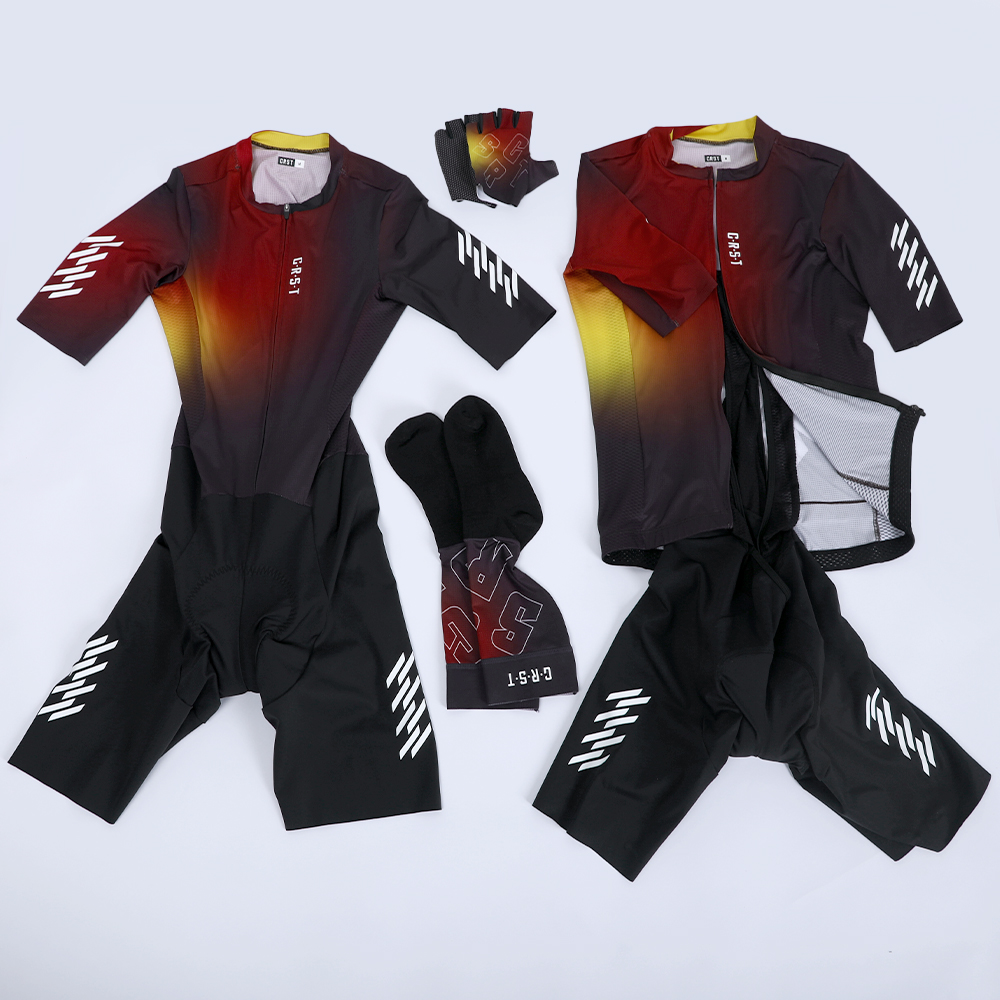
The core concept of triathlon apparel lies in the principle of “three disciplines, one suit,” allowing athletes to complete the entire race—from swimming to cycling to running—without changing clothing. While this may appear straightforward, in actual competition every second spent during transitions can influence the final result. To achieve this objective, triathlon suits are carefully designed to accommodate the distinct demands of each discipline.
In the swimming segment, the garment must closely conform to the body to minimize hydrodynamic drag, enabling athletes to maintain speed and stability during dives and water entry. Once the race transitions to the cycling stage, the suit must balance aerodynamic efficiency by reducing air resistance while also providing adequate comfort and structural support during prolonged riding, helping athletes maintain an optimal posture and consistent power output. During the running phase, the suit must offer sufficient flexibility and comfort, supporting the body’s natural range of motion during extended periods of running without causing restriction.
Through this carefully balanced multi-disciplinary design approach, triathlon suits enable athletes to maintain high levels of efficiency and performance throughout the entire race—capabilities that conventional running or cycling apparel cannot fully achieve.
In triathlon competitions, the efficiency of transitions is critically important. Every second spent in the transition zone can influence an athlete’s final performance and overall race result. The design philosophy of professional triathlon suits is therefore developed around the entire race process, ensuring that athletes can smoothly progress from swimming to cycling, and subsequently from cycling to running, without requiring additional time to change clothing.
In practical racing scenarios, the advantages of triathlon suits become particularly evident. During long-distance triathlon events, athletes must cope with varying water temperatures, wind conditions, and road surfaces. When using conventional sportswear, athletes may encounter issues such as increased water resistance during the swim, greater aerodynamic drag while cycling, or discomfort during the running stage. Professional triathlon suits, however, are specifically engineered with these variables in mind, enabling athletes to complete the race more smoothly while improving overall performance and race experience. In addition, the psychological benefits associated with triathlon apparel should not be overlooked. Wearing professionally designed competition gear can enhance an athlete’s sense of confidence and concentration, making it easier to maintain focus and perform at an optimal level throughout the race.
Conclusion
In summary, the distinction between triathlon apparel and conventional sportswear lies not merely in the performance of a single discipline, but in the comprehensive optimization of performance across three sports. This includes facilitating rapid transitions, maintaining efficiency during continuous movement, and achieving a balanced performance across swimming, cycling, and running.
When selecting triathlon suits, brands and teams should therefore focus on the underlying athletic logic and real usage scenarios rather than evaluating products solely based on single-function features. A clear understanding of the design philosophy behind triathlon apparel enables brands to choose products that not only meet functional requirements but also strengthen their professional image, while simultaneously providing athletes with an optimal racing experience.
Best Fabrics for Cycling Jerseys: Breathability, Comfort and Performance
How to Choose a Custom Triathlon Apparel Manufacturer for Your Brand