Why Fit Matters in High Performance Cycling Apparel
For many riders who are new to high-performance cycling apparel, the differences between cycling jerseys often appear to be related mainly to fabric, graphics, or overall design style. However, in professional cycling apparel, one of the most important factors affecting comfort and riding performance is not simply appearance, but how well the garment fit is engineered for actual riding conditions.
Unlike regular sportswear, cycling apparel is not designed for a normal standing posture. Whether for road cycling training, long-distance endurance riding, or high-speed racing, cyclists spend long periods of time in a forward riding position. Because of this, high-performance cycling apparel must be developed around shoulder rotation, back extension, waist stability, and lower body movement during riding.
This is also why many professional cycling jerseys initially feel tighter and more compressive than ordinary athletic clothing. In reality, this close-fitting structure is not designed simply to create a tighter appearance, but to reduce unnecessary fabric movement while improving body stability and aerodynamic efficiency during cycling.
In high-performance cycling apparel, garment fit can directly influence aerodynamic performance. During high-speed riding, loose fabric and excessive material movement can increase airflow disruption and reduce riding efficiency. For this reason, many race fit cycling jerseys use more body-contoured panel construction, optimized sleeve length, and strategically engineered fabric stretch directions to reduce drag.
By comparison, more casual cycling jerseys or club fit cycling apparel often allow additional room for movement and relaxed comfort during everyday riding. This difference in fit philosophy is one of the main reasons why various cycling jerseys feel dramatically different when worn.
Fit also plays a major role in long-distance riding comfort. Many cycling jerseys may appear short or unusually tight while standing upright, but the garment is actually designed to extend naturally once the rider moves into a cycling posture. If the garment structure is not properly developed for riding movement, cyclists may experience shoulder tension, jersey lift, or excess fabric gathering during extended rides.
For endurance cycling and high mileage training, these small discomforts often become increasingly noticeable over time. A stable cycling apparel fit helps reduce friction, improve riding stability, and maintain comfort throughout long riding sessions.
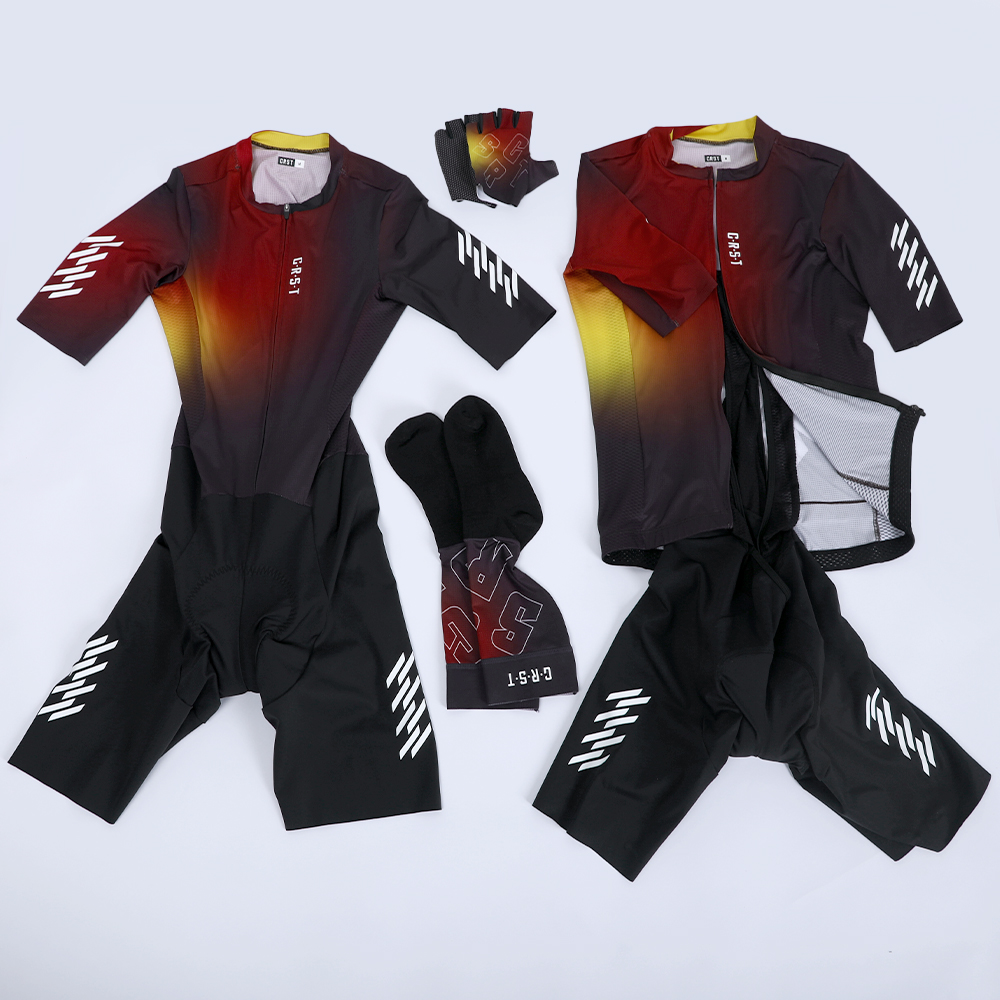
Compression support is another important part of high-performance cycling apparel design. Many professional cycling jerseys and bib shorts incorporate controlled compression zones around the sleeves, waist, and legs to improve support and reduce fabric movement during riding. Proper compression can also help riders maintain more stable muscle positioning during high-intensity cycling efforts.
However, effective compression does not simply mean tighter garments. Poorly engineered fit structures may create excessive pressure in certain areas even when advanced fabrics are used. This is why professional cycling apparel brands often combine ergonomic panel construction with different stretch levels across various body zones.
Fit engineering becomes even more critical in cycling bib shorts. Bib strap positioning, chamois alignment, and leg panel structure all influence riding comfort and stability. If the chamois shifts during movement or bib tension is uneven, riders may experience discomfort and pressure buildup during longer rides.
As a result, many premium cycling bib shorts are developed through dynamic riding tests rather than simple size confirmation alone. Compared with standard athletic shorts, professional cycling bib shorts focus much more heavily on riding stability and support throughout actual cycling conditions.
Fit design also affects the consistency of team cycling apparel and OEM cycling apparel projects. Different regional markets often have different preferences regarding compression level and riding fit. Some riders prefer aggressive race fit cycling jerseys, while others prioritize comfort-oriented endurance fit structures.
Because of this, many experienced cycling apparel manufacturers develop multiple fit systems for different riding applications and customer groups. For custom cycling apparel projects, balancing performance fit with rider comfort expectations has become an increasingly important part of product development.
As cycling apparel continues evolving toward higher performance standards, fit engineering has become far more than a simple styling element. It is now a core factor affecting aerodynamics, riding stability, long-distance comfort, and overall cycling performance.
For professional cycling apparel, truly effective fit design is not about making garments excessively tight. Instead, the goal is to create a natural riding-focused structure that improves body support, movement efficiency, and comfort during real cycling conditions.
We support teams and brands in planning MOQ, optimizing order quantity, and ensuring consistent production from design to delivery.
Contact us to discuss your project and get a practical MOQ solution tailored to your needs.
Email: amytong@tarstone.com
WhatsApp: +86 150 5417 8785
Website: www.tarstone.com
What Makes Aero Cycling Jerseys Different From Standard Cycling Jerseys
Why Custom Cycling Apparel Orders Get Delayed and How Professional Manufacturers Prevent It