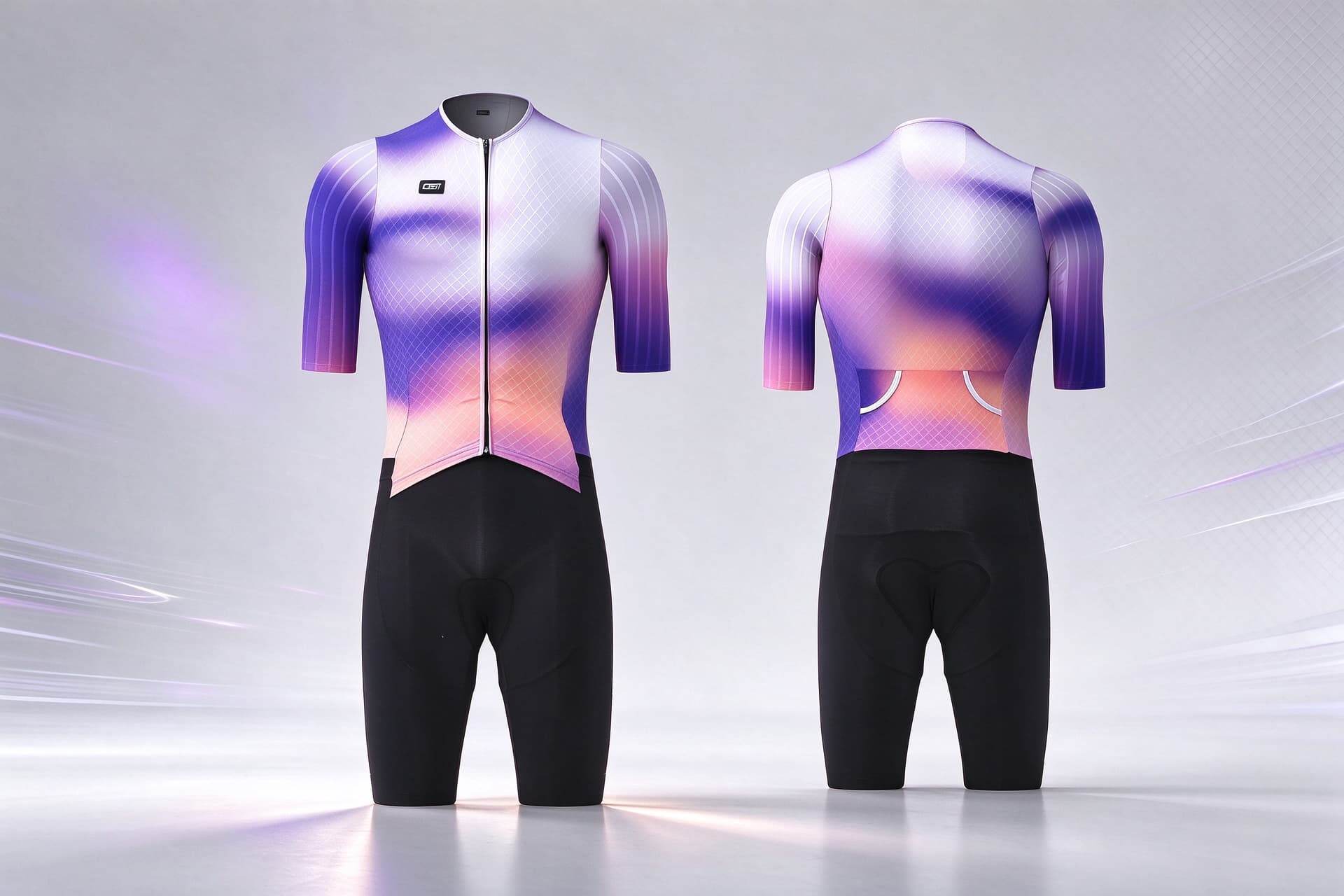
Why Do Cycling Jerseys Have Three Back Pockets?
Three back pockets are one of the most recognizable features of a traditional road cycling jersey. They provide practical storage for food, tools, personal items, and other essentials while keeping those items close to the body.
The three-pocket layout is not simply a traditional design choice. Pocket size, depth, opening, stretch, and construction all affect how well the jersey works during a ride.
For brands developing a custom cycling jersey, understanding how cycling jersey pockets are designed can also help determine the right storage configuration for a specific product.
Why Do Cycling Jerseys Have Back Pockets?
A cycling jersey is designed around a forward riding position, so normal front or side pockets are not always convenient.
Rear pockets provide an accessible place to carry items such as energy gels, snacks, keys, cards, small tools, a phone, and lightweight clothing. Keeping storage at the back also helps maintain a clean front of the jersey and keeps carried items close to the rider.
This is why cycling jersey back pockets are considered an important functional part of many road cycling jerseys.
Why Are There Usually Three Back Pockets?
The traditional three-pocket arrangement offers a practical balance between storage and organization.
Instead of putting everything into one large compartment, riders can separate different items between the three pockets. This can make frequently used items easier to find and help distribute the load across the back of the jersey.
The three-pocket layout is common, but it is not a requirement for every cycling jersey. Different products may use different configurations depending on storage needs, riding distance, and intended use.
How Are the Three Cycling Jersey Pockets Used?
There is no fixed rule for what belongs in each pocket. Riders often organize their belongings according to the type of ride and the amount of storage they need.
The center pocket can be used for larger items, while the side pockets may hold smaller items such as gels, snacks, keys, or tools. Riders can also organize items according to how often they need to access them.
The important point is that cycling jersey rear pockets need to provide practical access while remaining stable during movement.
What Makes a Good Cycling Jersey Pocket Design?
A good pocket needs to work when the jersey is both empty and loaded.
Pocket depth affects how securely items are held and how easily they can be reached. Width affects capacity, while the opening needs to provide access without allowing contents to fall out easily.
Stretch is also important. The pocket should expand enough to hold different items while maintaining its shape after repeated use.
The pocket connection to the rear panel matters as well. When a pocket is loaded, additional weight can put tension on the fabric and seams. Appropriate construction helps keep the pocket stable without pulling excessively on the jersey.
These details are all part of cycling jersey pocket design and should be considered together with the fabric, rear panel, hem, and overall garment construction.
Why Do Some Cycling Jerseys Have Zippered Pockets?
Some cycling jerseys add a zippered pocket alongside the traditional rear pockets to provide additional security for items such as a phone, keys, cards, or other small valuables.
A cycling jersey zip pocket does not necessarily replace the standard three-pocket layout. It can be added as an additional storage solution when a product needs a more secure compartment.
Other jerseys may use deeper or larger pockets when greater storage capacity is important. The appropriate configuration depends on what riders need to carry and how the garment is intended to be used.
How Pocket Design Affects Stability and Comfort
A pocket can behave differently once it is loaded. Additional weight can stretch the pocket fabric and place more tension on the rear panel and hem. Poorly supported pockets may sag, pull on the jersey, or allow the contents to move excessively.
Pocket placement and construction therefore need to work with the overall garment fit. The storage area should remain stable while allowing the rider to access the contents without creating unnecessary movement or tension.
How Can Brands Customize Cycling Jersey Pocket Design?
For a custom cycling jersey, the pocket configuration can be developed around the intended use of the product.
Brands can consider the number of pockets, their dimensions, placement, opening, materials, and whether an additional secure compartment is needed.
A training jersey, endurance jersey, and race-focused jersey may not require exactly the same storage setup. The pocket design should therefore work with the overall garment construction and product positioning.
The pocket structure also needs to work with the rear panel, artwork, seams, hem, and overall fit. This makes pocket development part of the complete jersey specification rather than an isolated detail.
For broader information about custom cycling jersey production, see How to Choose the Right OEM Cycling Jersey Manufacturer .
What Should Brands Check During Sample Development?
Pocket performance should be evaluated on a physical sample before bulk production.
First, check the empty garment to make sure the pockets sit correctly and do not distort the rear panel. Then load the pockets with the types of items the finished product is expected to carry. This helps evaluate depth, stretch, opening, capacity, and stability.
The garment should also be checked in the intended riding position. A pocket that looks correct when the jersey is laid flat may behave differently once the fabric is stretched around the rider.
Accessibility should be considered at the same time. Riders should be able to reach common items without excessive movement. Finally, inspect the pocket attachment points, seams, openings, and reinforcement areas to make sure the construction is appropriate for the intended use.
Frequently Asked Questions
What do you put in cycling jersey back pockets?
Common items include gels, snacks, keys, small tools, cards, phones, and lightweight clothing. The exact arrangement depends on the rider and the type of ride.
Are three pockets better than two?
Not necessarily. Three pockets are a common and versatile solution, but the best configuration depends on storage requirements and the intended use of the jersey.
Do cycling jerseys need a zippered pocket?
Not every jersey needs one. A zippered pocket can provide additional security for phones, keys, cards, or other small valuables.
Can cycling jersey pocket design be customized?
Yes. For a custom cycling jersey, pocket number, size, placement, materials, openings, and security features can be developed according to the product requirements.
Three back pockets are popular because they provide a practical combination of storage, organization, and accessibility while fitting naturally into the structure of a cycling jersey.
For brands developing custom cycling apparel, the number of pockets is only one part of the decision. Pocket dimensions, stretch, opening, stability, and placement should match the intended use of the product.
A well-designed pocket should provide useful storage while remaining stable, accessible, and comfortable during riding.
Contact us to discuss your custom cycling jersey project and request a manufacturing quotation.
Email: amytong@tarstone.com
WhatsApp: +86 150 5417 8785
Website: www.tarstone.com
How Cycling Apparel Manufacturers Control Quality During Bulk Production
Sublimation vs Heat Transfer for Cycling Apparel: Which Printing Method Should Brands Choose?