The Ultimate Cycling Jersey Fabric Guide: Selecting the Right Material for Your Brand
For any cycling brand, team, or club launching custom apparel, one decision quietly shapes everything else: the fabric. It determines how a jersey breathes on a summer climb, how it holds its print after 50 washes, how it feels against skin at the hour of a ride-and ultimately, whether riders reorder or return it.
Yet fabric is the most misunderstood part of the sourcing process. Many brands choose based on price per meter alone, only to discover that the "cheap" fabric pills, fades, or sags after a season. This cycling jersey fabric guide is written to help you avoid that. Drawing on our experience as a custom cycling apparel manufacturer, we'll walk through how to evaluate materials, compare the main fabric types, and match the right fabric to the right product-so your cycling apparel fabric selection supports your brand instead of undermining it.
In this guide, we walk through the six criteria that actually matter when selecting fabric, the main cycling jersey fabrics compared, advanced and performance fabrics including graphene and mesh, how to choose the best fabric by product and use case, what fabric choice means for your brand, and a short FAQ at the end.
The 6 Criteria That Actually Matter
Before comparing specific materials, it helps to know what you are comparing them on. A professional fabric decision balances six factors. Rarely does one fabric win on all six-the art is knowing which matters most for your product.
1. Breathability & moisture management
Cycling is a high-sweat activity. A good jersey fabric moves moisture away from the skin to the surface where it evaporates, rather than holding it. Poor moisture management leads to a heavy, clammy feel and chafing. Look for fabrics engineered with capillary/ wicking structures and open knit zones.
2. Stretch & recovery
Stretch lets a jersey follow the body through an aggressive riding position; recovery is what makes it snap back instead of bagging out. This is where elastane content matters. A fabric can be stretchy but have poor recovery-that's one that sags at the elbows after a few rides.
3. Weight & hand feel
Measured in GSM, weight affects both performance and perceived quality. Lightweight fabrics(110-140GSM) suit hot-weather and race jerseys; mid-weight (150- 200 GSM) suits all-round and club kits; heavier fabrics suit thermal and winter pieces.
4. Print performance
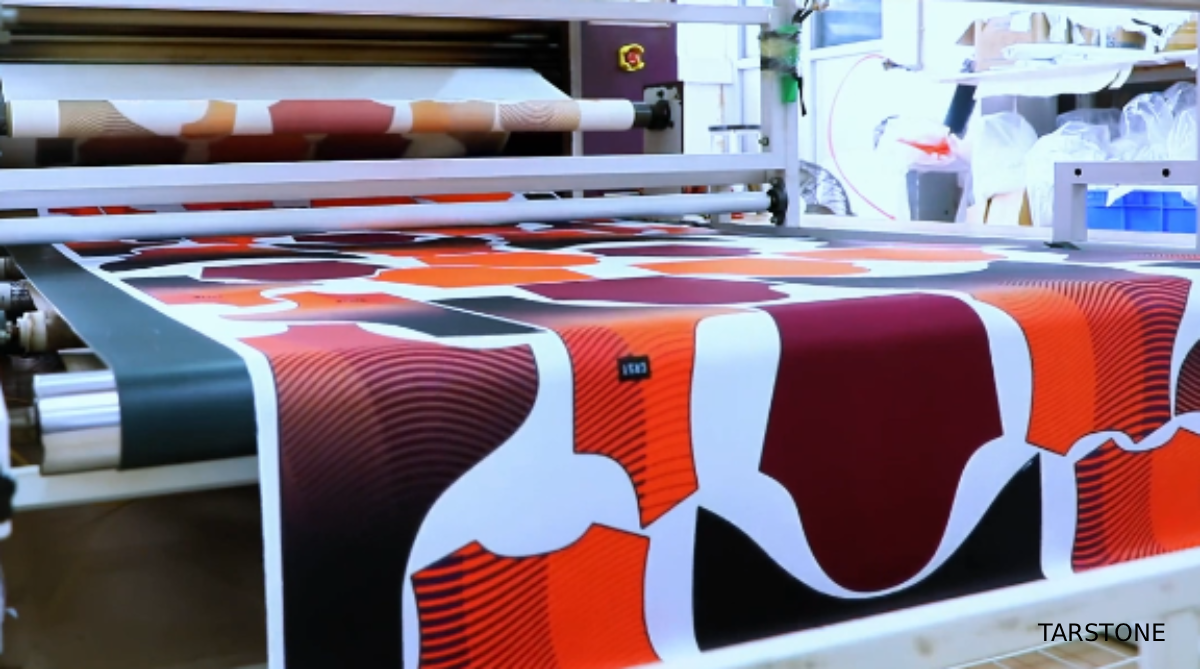
Most custom cycling apparel is decorated with dye-sublimation, which bonds ink into polyester fibers. That's why the vast majority of cycling jerseys are polyester-based; natural fibers like cotton don't take sublimation well. If your brand relies on bold, edge-to-edge graphics, print compatibility is non-negotiable.
5. Durability & colorfastness
Riders wash their kits constantly. A quality fabric resists pilling, holds its shape, and keeps colors vivid after dozens of washes. This is often where the gap between a premium mill and a bargain supplier shows up-and it's invisible until months later.
6. Cost & availability
Finally, the practical reality: premium mill fabrics(e.g., Italian suppliers like MITI or Carvico) cost more and may carry minimums, while standard performance polyester is economical and widely stocked. Your price point and order volume shape what's realistic.
The Main Cycling Jersey Fabrics Compared
Here are the core fabric families used in cycling jerseys, and what each is best at. This is the heart of any best fabric for custom cycling jersey comparison.
Performance polyester is the default body fabric for most jerseys. It delivers excellent dye-sublimation print quality, dries quickly, is durable, and remains economical; its main watch-out is that on its own it offers less natural stretch, which is why it is usually blended with elastane. Poly-elastane, the Lycra or spandex blend, brings great four-way stretch and recovery for a compressive race fit-at a higher cost than plain polyester-making it the choice for aero and race jerseys, skinsuits, and bib short panels. Nylon-elastane offers a softer hand feel, good abrasion resistance, and muscle support, which suits premium bib shorts, base layers, and compression pieces, though it prints slightly differently than polyester. Mesh and open-knit fabrics provide maximum breathability and ventilation at ultralight weight, ideal for side panels, back panels, hot-weather jerseys, and base layers, but they are not for full-coverage warmth. Milk silk and double-knit fabrics give a smooth, premium feel with good drape and work well for lifestyle and club jerseys, even if they are heavier than race fabrics. Finally, fleece and Roubaix brushed fabrics deliver thermal insulation with a soft brushed inner, making them the answer for winter jerseys, jackets, and thermal tights, although they are too warm for summer.
Advanced & Performance Fabrics
Beyond the staples, a growing number of brands differentiate with technical and sustainable fabrics. These can become a genuine selling point for your line.
Graphene-enhanced fabric
Graphene is added to fabric to improve thermal regulation, moisture movement, and antibacterial(anti-odor) performance. It's become a talking point in premium cycling apparel, and it lets a brand tell a real innovation story. If you want a technical edge, this is one of the most marketable options available today.
Specialized functional fabrics
Specialized functional fabrics fill the remaining gaps in a complete line. UV-protection and fast-drying fabrics suit hot-climate and arm-sleeve applications; water-repellent woven fabrics work for vests, gilets, and shoulder panels; ribbed and anti-slip fabrics handle grippers, cuffs, and hems; and hydrophobic seamless knit is designed for next-to-skin base layers.
Choosing the Best Fabric by Product & Use Case
The single most useful question in cycling apparel fabric selection is not "what is the best fabric?" but "best for what?" Here's a practical map.
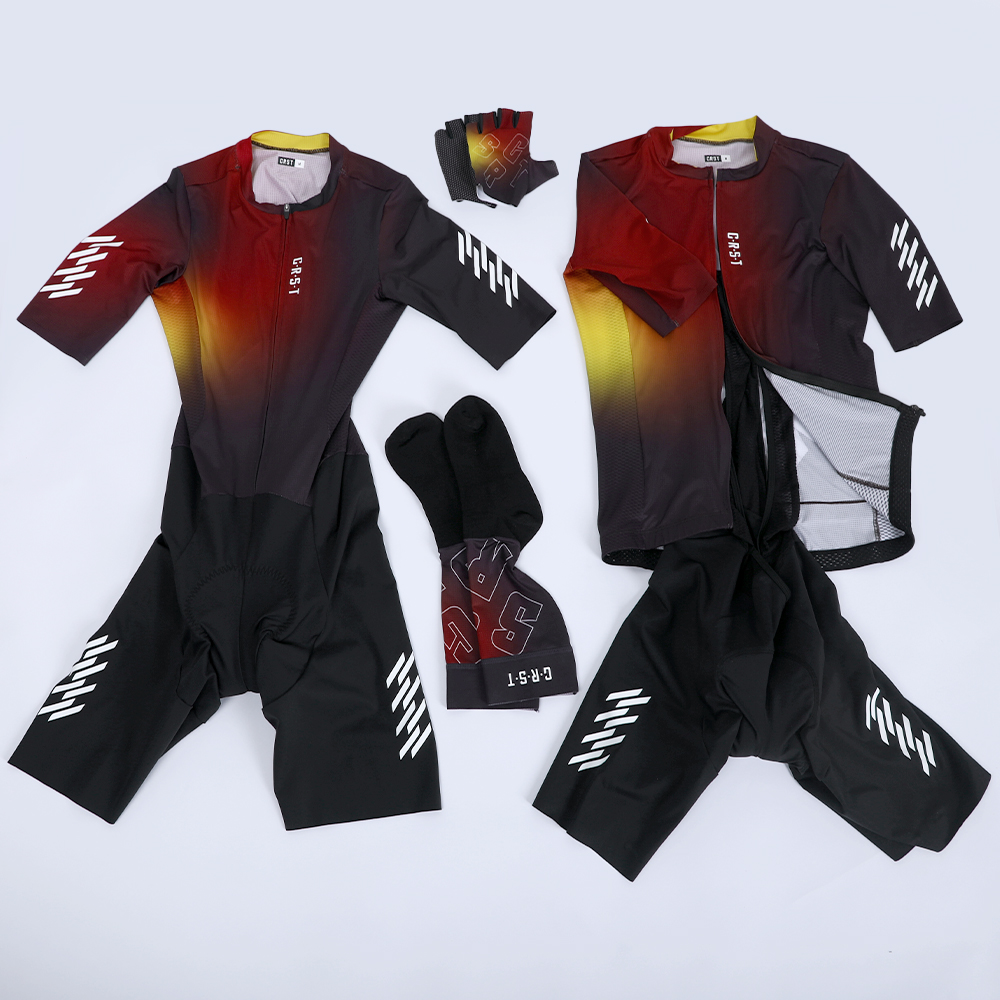
For a race or aero jersey, use a lightweight poly-elastane body for a compressive aero fit paired with mesh vent zones. An all-round club jersey works best with mid-weight performance polyester plus mesh side panels, balancing comfort and print quality. A hot-weather or summer jersey calls for an ultralight fabric with large mesh areas and a UV or fast-dry finish. A winter or thermal jersey needs brushed fleece or Roubaix for insulation, along with a water-repellent front panel. Skinsuits and TT suits rely on high-elastane aero fabric for a locked-in, wrinkle-free fit. Lifestyle and casual jerseys are better in milk silk or double-knit for a softer, premium everyday feel, and base layers should use seamless knit or hydrophobic mesh for next-to-skin moisture control.
Notice the pattern: performance polyester and its blends form the backbone, mesh handles ventilation, and specialized fabrics solve specific problems(heat, cold, aero, feel). A well-designed line uses a small, deliberate palette of fabrics across products rather than a different fabric for every SKU-this keeps quality consistent and sourcing efficient.
What This Means for Your Brand
Fabric selection isn't only a technical decision-it's a brand decision. The fabrics you choose signal your positioning. A premium race brand leans into Italian mill fabrics around durable, great-printing performance polyester at a workable price. A sustainability-led brand builds its story around recycled fabrics and eco-friendly packaging.
The good news: you don't have to figure this out alone. As a custom cycling apparel manufacturer with an in-house fabric library and premium mill partners, we help brands and teams match fabric to positioning, budget, and order volume-then produce it. If you are unsure which materials fit your line, that's exactly the conversation to start with.
FAQ - Cycling Jersey Fabric
"What is the best fabric for a custom cycling jersey?"
For most custom cycling jerseys, a performance polyester or poly-elastane blend is the best all-round choice- it prints beautifully with dye-sublimation, dries fast, and is durable. The "best" fabric ultimately depends on the product: race jerseys favor high-stretch aero fabrics, while hot-weather jerseys favor ultralight mesh.
"Why are most cycling jerseys made of polyester and not cotton?"
Polyester wicks moisture, dries quickly, and-crucially-bonds with dye-sublimation ink allowing vivid, permanent, full-coverage prints. Cotton absorbs sweat, dries slowly, and doesn't sublimate well, making it unsuitable for performance cycling apparel.
"What GSM is best for a cycling jersey?"
Roughly: 110-140GSM for lightweight summer/race jerseys, 150-200 GSM for all-round club jerseys, and heavier brushed fabrics for winter pieces. Lighter isn't always better-it's about matching weight to use.
"Can i mix different fabrics in one jersey?"
Yes, and premium jerseys usually do. Combining an aero front panel, a breathable mesh back, and gripper hems is standard practice. Thinking in "fabric zones" produces a better-performing kit.
"Do you offer sustainable or recycled fabrics?"
Yes. Recycled polyester and other sustainable options are available and perform comparably to standard fabrics for most jerseys. Contact us for the current sustainable fabric library.
Fabric selection is the core foundation of high-quality custom cycling jerseys. Price alone cannot define fabric quality; breathability, stretch recovery, print performance, durability, and brand positioning must all be taken into comprehensive consideration.
Different riding scenarios, product lines, and brand positioning require targeted fabric collocation. From basic polyester blends to graphene functional fabrics and recycled sustainable materials, matching the correct fabric system can greatly improve rider experience and your product competitiveness in the market.
As a professional cycling apparel OEM & ODM manufacturer, we have complete fabric samples and mature production solutions for all types of cycling jerseys. Whether you develop race suits, summer lightweight kits, winter thermal jerseys, or casual club apparel, we can customize fabric matching schemes according to your budget and market orientation.
Contact us to get professional fabric recommendations and a custom cycling jersey production solution.
Email: amytong@tarstone.com
WhatsApp: +86 150 5417 8785
Website: www.tarstone.com
How to Build Your Cycling Brand: A Complete Guide from Design to Production
How Chamois Padding Affects Cycling Bib Short Performance