Inside a Cycling Jersey Production Line: Step-by-Step from Fabric to Finished Garment
When you order a custom cycling jersey, you are not really buying a piece of clothing-you are buying a process. The difference between a kit that still looks sharp after two seasons and one that cracks at the first wash comes down to decisions made on the production floor, long before the garment reaches your hands. This walk-through follows a jersey from raw fabric to finished, packed unit, and at each step we point out what a buyer should look for when vetting a factory. Understanding the line is the fastest way to tell a real manufacturer from a trading company with a nice website, and it is exactly the transparency we build our own shop floor around.
Step 1: Selecting the fabric
Every jersey starts as a roll of technical knit, and the weight of that fabric decides how the garment behaves on the road. Summer jerseys typically run between 120 and 150 grams per square meter, light enough to disappear against the skin yet dense enough to carry a print; thermal and winter jerseys use a heavier, often brushed knit for insulation. The base is almost always polyester for moisture transport, blended with a small percentage of elastane so the fabric recovers its shape instead of bagging out. Our fabric guide breaks down which material suits which use, and we keep those same fabrics on the shelf so what you spec is what gets cut.
Step 2: Designing and proofing the artwork
Before a single panel is cut, the artwork has to become a file the machines can read. Artwork is set up in vector format, color-matched to Pantone or hex values, and laid onto a pattern template that already accounts for the riding posture—a longer back panel, a forward-curved sleeve, a higher armhole. A real factory returns a digital proof showing exactly how the graphics land across seams and pockets, and only starts cutting once you approve it. If a supplier skips the proof or cannot show you how your logo sits on the actual panel shape, that is the moment to hesitate. For teams building a brand from zero, our guide covers the full path from a rough idea to an approved print.
Step 3: Sublimation printing
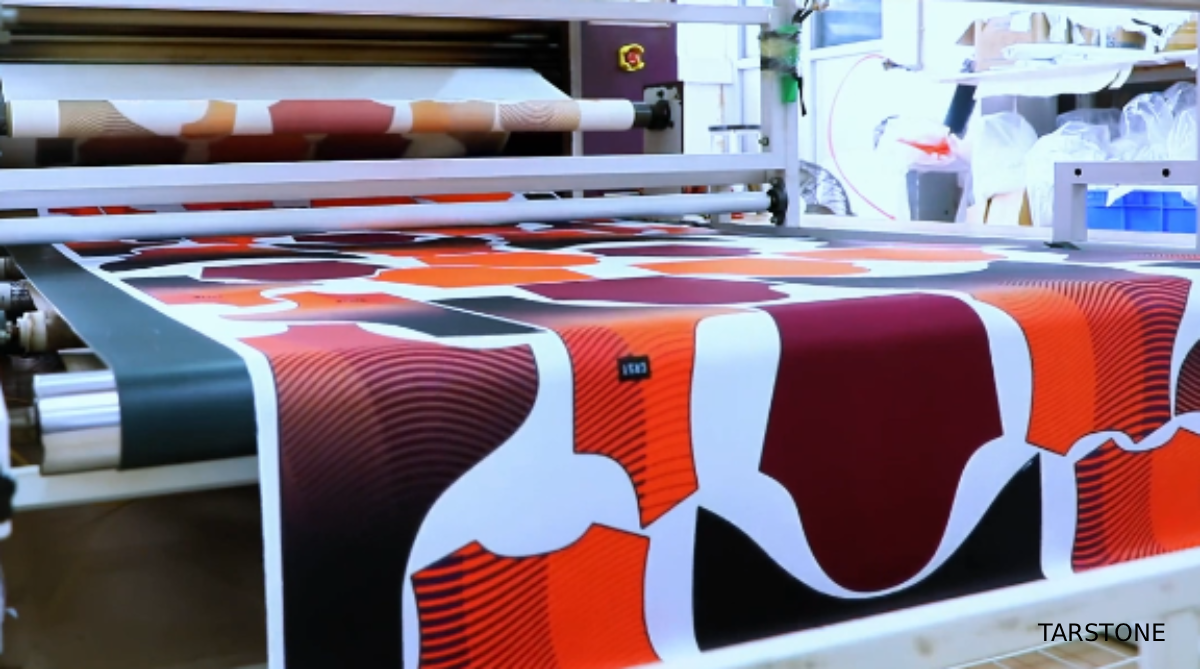
Custom cycling jerseys are almost always printed by dye sublimation rather than screen printing, and the reason is physical. Solid ink is heated into a gas that bonds directly into the polyester fiber, so the color becomes part of the fabric instead of sitting on top of it. That is why a sublimated jersey never cracks, peels, or fades through repeated washing, and why it can carry a full-photo gradient across the whole garment. The print happens on transfer paper first, then the paper is pressed onto the cut-ready fabric under heat and pressure.
Step 4: Cutting the panels
Printed fabric is cut into the individual panels of the pattern: front, back, sleeves, side inserts, pockets, hem. Computer-controlled cutting keeps every piece accurate to the millimeter, which matters more than it sounds: a panel that is off by a few millimeters throws the whole seam alignment out and leaves the print misaligned across the body. Laser or CNC cutting also reduces fraying at the edges, giving the sewer a cleaner start. When you visit a line, watch the cutting table—consistent, burr-free edges are a quiet signal of a factory that controls its tolerances instead of hoping for the best.
Step 5: Sewing and construction
This is where cheap jerseys fail first. The panels are joined on the sewing floor, and the choice of seam decides whether the garment chafes on a long ride. Flatlock stitching sits flush against the fabric and is used along high-contact areas like the underarms and side seams, while overlock is reserved for lower-stress joins. A full-length YKK or equivalent zipper goes in with a garage flap at the top so the pull never scratches the neck, and a silicone gripper elastic finishes the hem so the jersey stays put instead of riding up. The back panel is cut longer than the front—typically five to ten centimeters—to cover the lower back in the riding position. A buyer can test a factory's quality with one question: do you flatlock the underarms? An honest "no" tells you everything about where the garment will fail.
Step 6: Quality control
Before anything is packed, finished jerseys are inspected piece by piece. Loose threads are trimmed, seam strength is pull-checked, pocket stitching is tested separately because rear pockets carry phones and nutrition and take constant stress, and colorfastness is checked against rubbing and sweat. Defective units are repaired or pulled, and shortages are made good before the order ships. A supplier who cannot tell you their defect-handling process—what happens when a jersey fails the check—is either not checking or not being straight with you. Our own line runs every unit through this stage, because a kit that falls apart on its third ride is the fastest way to lose a team's trust.
Step 7: Finishing and packing
The last stage is quietly important. Garments are pressed to set their shape, labeled, and individually poly-bagged so they arrive crease-free and clean, then cartoned by size and style for an easy hand-out on kit day. Proper packing also protects sublimation prints from scuffing in transit, which is why we avoid over-stuffing cartons. For a team manager, this is the step that turns a box of jerseys into a smooth distribution instead of a sorting headache, and it is worth confirming a factory's packing method before you commit the order.
What to ask a factory before you order
Pulling the steps together, a short checklist separates real manufacturers from resellers. Ask for the fabric GSM and certification, ask to see a digital proof before cutting, ask which inks and press they use for sublimation, ask whether the underarms are flatlocked, and ask what happens to a unit that fails QC. A genuine factory answers all five without hesitation and usually invites you to see the floor. These are exactly the questions we expect from serious buyers, and the reason we published this walk-through is so you can arrive informed rather than guessing. The more specific your questions, the more confident you can be in the answer — and in the kit you eventually receive.
See the line for yourself
A production walk-through on a screen is useful, but standing on the floor is better. If you are weighing suppliers for your next team or brand order, send us your design and quantities and we will arrange a factory tour or a live video walk-through, then return a custom quote.
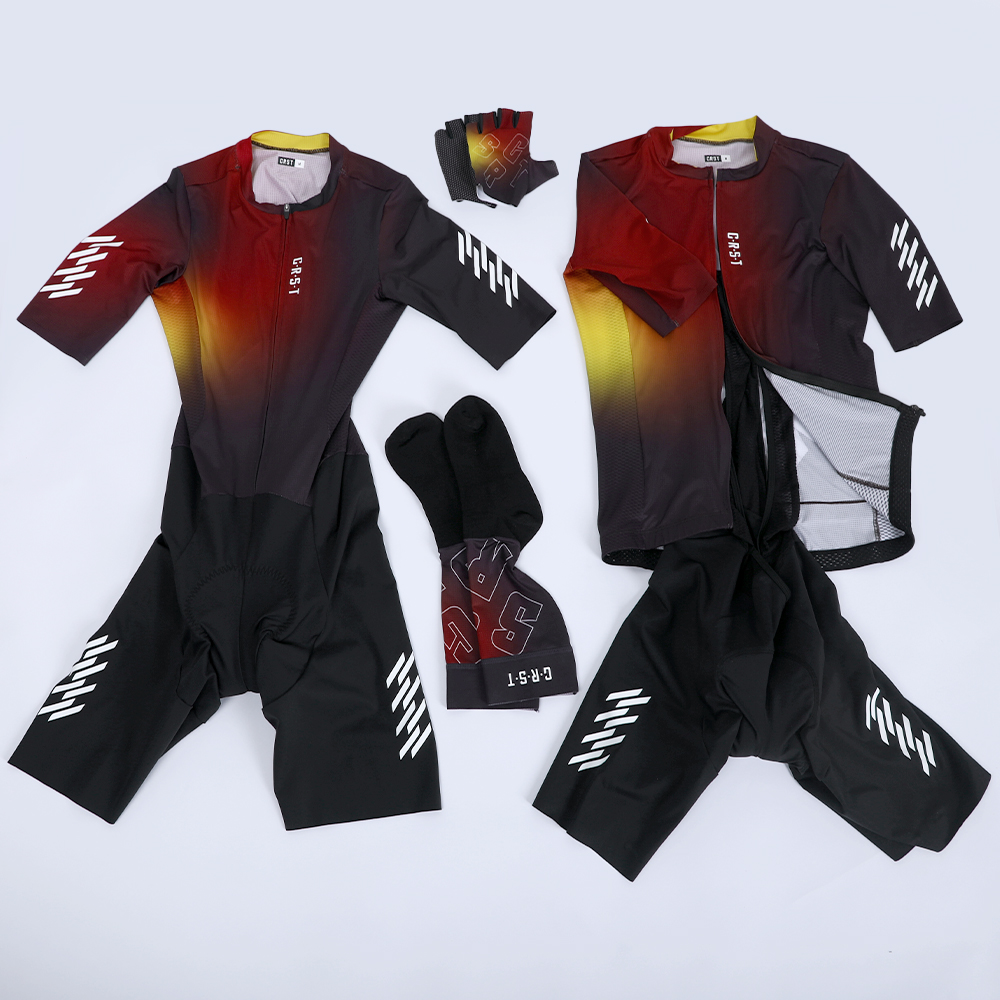
High-quality custom cycling jerseys rely on standardized manufacturing processes covering fabric selection, artwork proofing, sublimation printing, precision cutting, professional sewing, strict quality control and standardized packing. Every production link directly affects the durability, comfort and printing performance of your cycling kits.
Many buyers fail to distinguish real manufacturers from trading companies, which leads to poor product consistency and unexpected order delays. Mastering these production steps and targeted inquiry checklist helps you effectively screen reliable cycling apparel suppliers before placing bulk orders.
Tarstone is a professional cycling apparel OEM & ODM factory with complete in-house production lines. We support full dye sublimation custom cycling jersey production, independent sampling, transparent production monitoring and low MOQ cooperation for cycling clubs and emerging apparel brands.
Contact us to discuss your custom cycling jersey project and receive professional production advice and quotation.
Email: amytong@tarstone.com
WhatsApp: +86 150 5417 8785
Website: www.tarstone.com
How to Choose a Tri Suit for Your Team
Custom Cycling Kit Design Inspiration: 10+ Team Jersey Ideas for 2026