What Makes Aero Cycling Jerseys Different From Standard Cycling Jerseys
As road cycling and competitive riding continue evolving toward higher speeds and greater performance demands, cycling apparel has become much more than simple sportswear focused only on comfort and breathability. For many professional riders and cycling teams, aerodynamic efficiency has become an increasingly important part of cycling apparel development.
Especially during high-speed riding, even small changes in airflow resistance can influence overall riding efficiency. Because of this, more high-performance cycling apparel brands are developing Aero Cycling Jerseys designed specifically to reduce airflow disruption and improve riding stability during fast riding conditions.
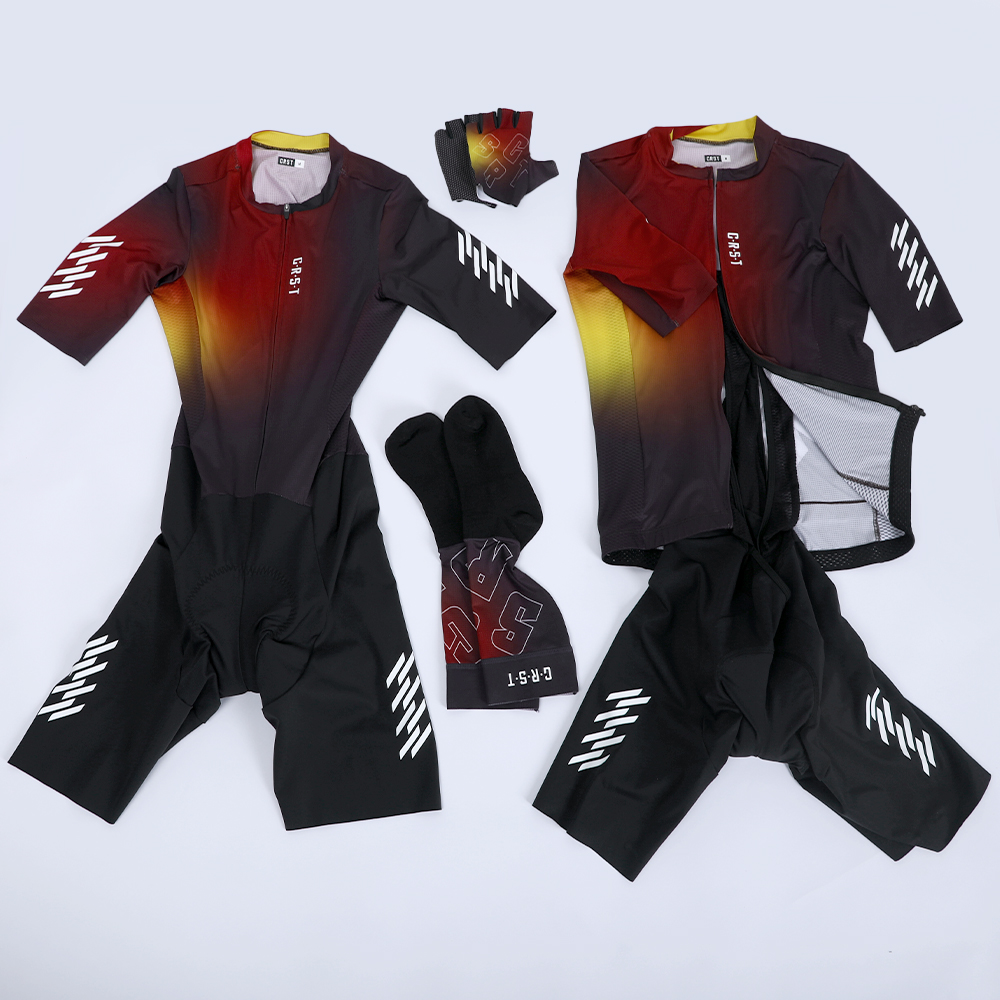
Unlike standard cycling jerseys, Aero Cycling Jerseys are not simply designed to fit tighter. Their structure is developed to better match body movement and riding posture during performance cycling situations through optimized fit engineering, fabric selection, and panel construction.
Many standard cycling jerseys are primarily designed for everyday comfort and relaxed riding conditions. As a result, they often include additional room for movement and a less aggressive fit structure. While this improves casual riding comfort, loose fabric movement and excess material can create additional airflow disruption during high-speed cycling.
Aero Cycling Jerseys, by comparison, usually feature a more body-contoured race fit structure. By reducing unnecessary fabric movement, the jersey remains more stable against the rider's body during forward riding posture, helping minimize drag caused by unstable airflow.
These differences become especially noticeable around the shoulders, sleeves, and waist areas. Many high-performance Aero Cycling Jerseys use extended sleeve lengths to reduce airflow turbulence around the arms. Some race-oriented cycling jerseys also incorporate laser-cut sleeve construction, allowing the sleeve edges to sit flatter against the skin and reduce drag during fast riding.
Fabric engineering is another major factor that separates Aero Cycling Jerseys from standard cycling apparel. Many high-performance cycling jerseys use different technical fabrics across specific body zones to optimize aerodynamic performance while maintaining riding comfort.
For example, chest and shoulder areas often use more compressive and stable fabrics to reduce material vibration during high-speed riding. Meanwhile, rear panels may focus more heavily on ventilation and moisture management by incorporating lightweight mesh structures that improve cooling efficiency during long rides.
Some Aero Cycling Jerseys also use textured fabrics on sleeves or shoulder panels. These textured surfaces are not designed purely for visual appearance, but instead help manage airflow patterns during riding in order to reduce certain forms of aerodynamic resistance.
Standard cycling jerseys, on the other hand, are usually developed with a more balanced focus on overall comfort rather than maximum aerodynamic optimization.
Panel construction also plays an important role in aerodynamic cycling apparel performance. Professional Aero Cycling Jerseys often reduce unnecessary seam placement while optimizing the direction and positioning of garment panels to improve airflow stability during riding.
At high riding speeds, even small fabric wrinkles or unstable material movement may gradually increase aerodynamic drag over long distances. Because of this, many premium cycling apparel brands place greater emphasis on riding-position stability rather than only focusing on how garment appears while standing still.
However, Aero Cycling Jerseys are no longer limited only to professional racing environments. As cycling apparel technology continues evolving, more endurance riders and performance-focused cyclists are beginning to appreciate the advantages of stable fit structures and aerodynamic efficiency during daily training and long distance riding.
Especially during extended road cycling sessions and high-frequency training, a more stable jersey structure can help reduce unnecessary fabric movement while improving overall riding support and comfort.
Of course, different riding situations still require different types of cycling apparel. For casual cycling and lower intensity riding, relaxed fit cycling jerseys may provide a more comfortable everyday experience. For riders focused on speed, endurance efficiency, and performance training, Aero Cycling Jerseys often provide greater riding stability and aerodynamic support.
As high-performance cycling apparel continues developing, aerodynamic design is gradually expanding beyond professional racing and becoming part of a much wider range of cycling applications. For many cycling brands and teams, Aero Cycling Jerseys now represent not only speed performance, but also the ongoing evolution of cycling apparel engineering, functional design, and riding comfort.
A truly effective Aero Cycling Jersey is not simply about creating a tighter garment. Instead, its purpose is to improve natural body support, airflow stability, and riding efficiency during real cycling conditions.
We support teams and brands in planning MOQ, optimizing order quantity, and ensuring consistent production from design to delivery.
Contact us to discuss your project and get a practical MOQ solution tailored to your needs.
Email: amytong@tarstone.com
WhatsApp: +86 150 5417 8785
Website: www.tarstone.com
How to Request an Accurate Quote for Custom Cycling Apparel
Why Fit Matters in High Performance Cycling Apparel